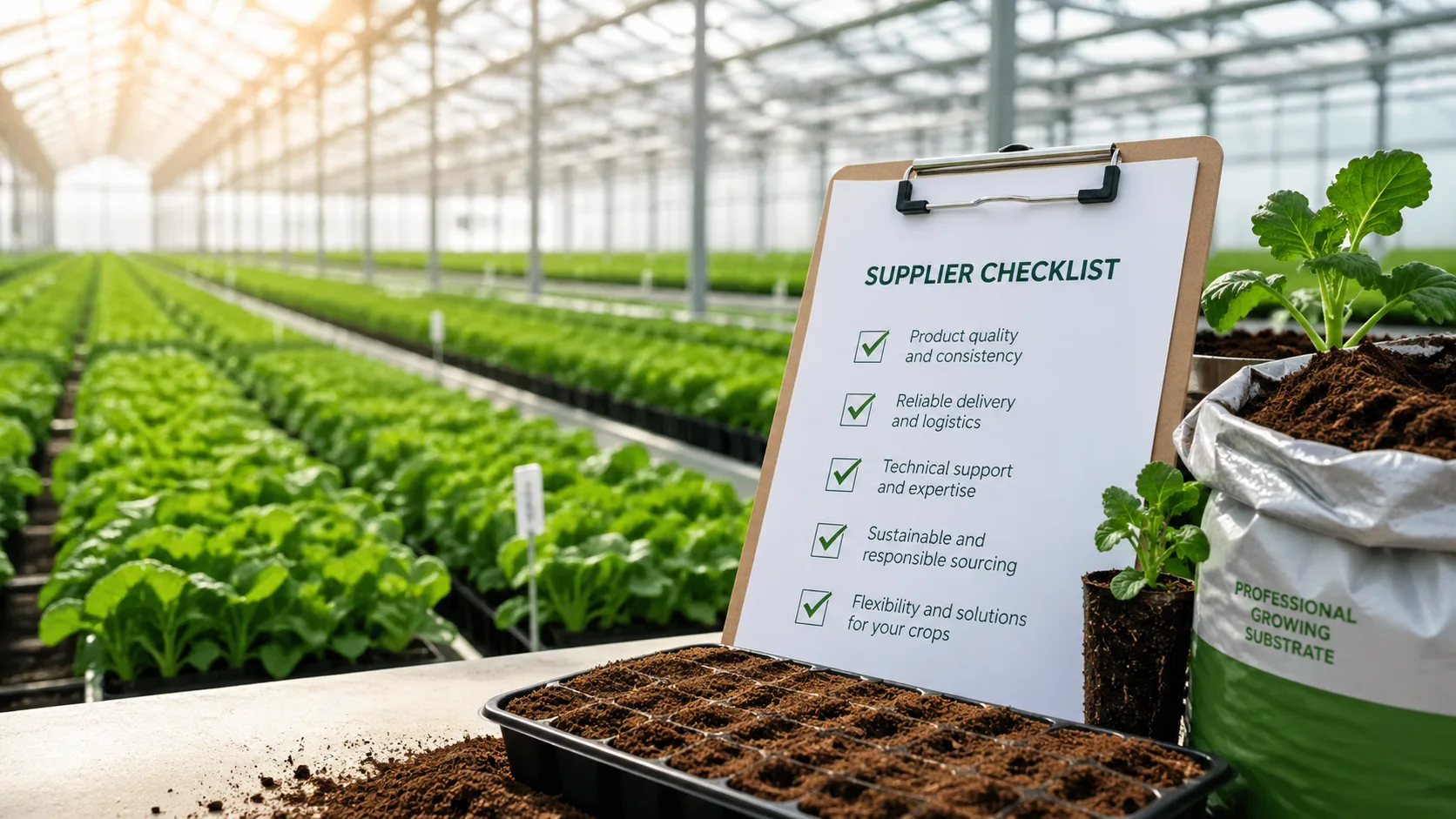
Choosing a commercial greenhouse substrate supplier affects crop consistency, labor efficiency, irrigation stability, and purchasing risk. This practical checklist helps growers and procurement teams compare suppliers with repeatable criteria instead of relying on price alone.
- Evaluate every commercial greenhouse substrate supplier on consistency, logistics, and technical support, not only price.
- Batch stability, packaging format, and delivery planning can have more operational impact than small per-unit price differences.
- Use one weighted scorecard across all supplier candidates before annual commitments.
- Confirm how each supplier supports your crop program, irrigation style, filling line, and seasonal delivery windows.
- Lock commercial terms, escalation rules, and product documentation before peak season starts.
Why supplier selection matters in 2026:
Selecting a commercial greenhouse substrate supplier is not only a purchasing step. It affects crop consistency, labor rhythm, irrigation decisions, and the amount of risk a production team carries through the season.
Most teams compare unit price early, but the larger costs often appear later: uneven structure, unstable moisture behavior, delayed shipments, packaging that does not fit the line, and limited technical follow-through when adjustments are needed.
When a substrate program is inconsistent, growers usually pay through labor rework, uneven plant development, irrigation or nutrition corrections, and avoidable scheduling pressure.
For procurement teams, the goal is not simply to buy substrate at the lowest price. The goal is to secure a dependable growing media program that production can run at scale.
Before scoring candidates against this checklist, agree internally which specification, certification and consistency standards a supplier must meet before it gets on the shortlist.
2026 Buyer checklist:
1. Product fit to crop program:
Verify whether the supplier is strong in your exact segment, such as high-porosity mixes, seed and plug programs, all-purpose mixes, or organic production. Broad catalog coverage is useful, but it does not replace proven fit for your crop program. Ask which formulas are standard, which are semi-custom, and which require development lead time.
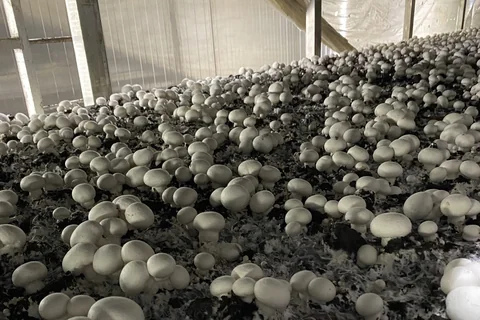
For Worldwide purchasing, seedling mixes and organic mixes should usually be reviewed early because they affect sensitive crop stages and buyer documentation. Blueberry growing mixes and peat products for mushroom farms should be treated as dedicated product groups, while raw peat should be evaluated as a base-material option rather than the first default recommendation.
2. Batch consistency controls:
Ask how structure range, pH, EC, moisture behavior, and raw material variation are monitored. Also ask what happens when a batch is outside the agreed target range. A strong commercial greenhouse substrate supplier should be able to explain its QA process clearly, not only make broad quality claims.
3. Packaging and handling alignment:
Confirm that available bale sizes, bag formats, pallet configuration, and compression level match your filling line, storage setup, and labor flow. Packaging mismatch can create hidden labor cost and slow line efficiency even when the mix itself performs well.
4. Logistics reliability:
Review normal lead times, peak-season lead times, truckload planning, and contingency handling. Define how priorities and escalation are managed when delivery windows tighten or crop schedules change.
5. Technical support depth:
Confirm what onboarding, troubleshooting, and practical guidance are available after the first delivery. Supplier support quality matters most when introducing a new mix, changing irrigation strategy, or comparing performance across different crop blocks.
6. Commercial clarity:
Lock minimum order quantities, quote validity windows, product file availability, and escalation process before the season starts. Put responsibilities in writing for technical documentation and issue response timelines.
Questions by operation type:
Propagation-heavy programs should focus on tray fill consistency, fine structure, moisture distribution, and early rooting uniformity. Small differences in structure can quickly show up across plug trays.
Finishing programs with frequent irrigation should focus on drainage behavior, air capacity, root-zone recovery, and how the mix performs after repeated watering cycles.
Mixed greenhouse operations that run broad SKU ranges usually need a stable baseline program first. Specialty formulas can then be added where there is a clear crop or handling reason.
How to use this checklist internally:
Before scoring shortlisted suppliers, use What Is a Professional Growing Media Supplier? to define the documentation, certification scope and trial support you expect.
Build a weighted scorecard before supplier meetings. Score each candidate on product fit, consistency controls, logistics reliability, technical support, and commercial clarity using the same scale.
Recommended scoring model:
Product fit 25%, consistency and QA 20%, logistics and lead-time reliability 20%, technical support 15%, commercial clarity 10%, documentation readiness 10%.
Review the results jointly with procurement, growing, and operations leads. This keeps the decision from becoming one-dimensional and reduces handoff friction after the agreement is signed.
Supplier scorecard example:
A practical scorecard should translate supplier promises into observable checkpoints. For example, ask each commercial greenhouse substrate supplier to provide recent quality documentation, available packaging formats, realistic seasonal lead times, and a named contact for technical escalation.
Score product fit only after confirming the crop program, irrigation style, tray or container size, and expected handling process. A supplier that performs well in one crop segment may still be a poor fit if the structure, moisture profile, or packaging format does not match daily production workflow.
For logistics, compare normal lead time, peak-season lead time, truckload planning process, and what happens when orders need adjustment. This is where a commercial greenhouse substrate supplier can either reduce operational friction or create hidden scheduling pressure.
For technical support, look for specific guidance rather than broad claims. Strong partners can explain how substrate structure affects watering rhythm, root-zone air movement, and early crop response. They should also help production and procurement teams interpret product files before large commitments are made.
The final decision should combine numbers and operational judgment. If two suppliers score closely, run a small pilot and measure filling speed, irrigation behavior, crop uniformity, and issue response before switching the wider program.
Common procurement mistakes:
Choosing by price alone, skipping batch QA questions, and treating packaging format as a secondary detail can create higher in-season cost than expected.
Another common mistake is requesting technical support only after operational issues appear. Define the support model upfront and agree on first-response expectations early.
Practical action step:
Use one weighted scorecard for all shortlisted suppliers and review decisions jointly between procurement, growing, and operations teams before annual commitments.
If supplier scores are close, run a short pilot on one production line and measure consistency, handling time, irrigation behavior, and correction workload before scaling program-wide.
Recommended ASB products
These products are commonly evaluated with the strategy covered in this article.
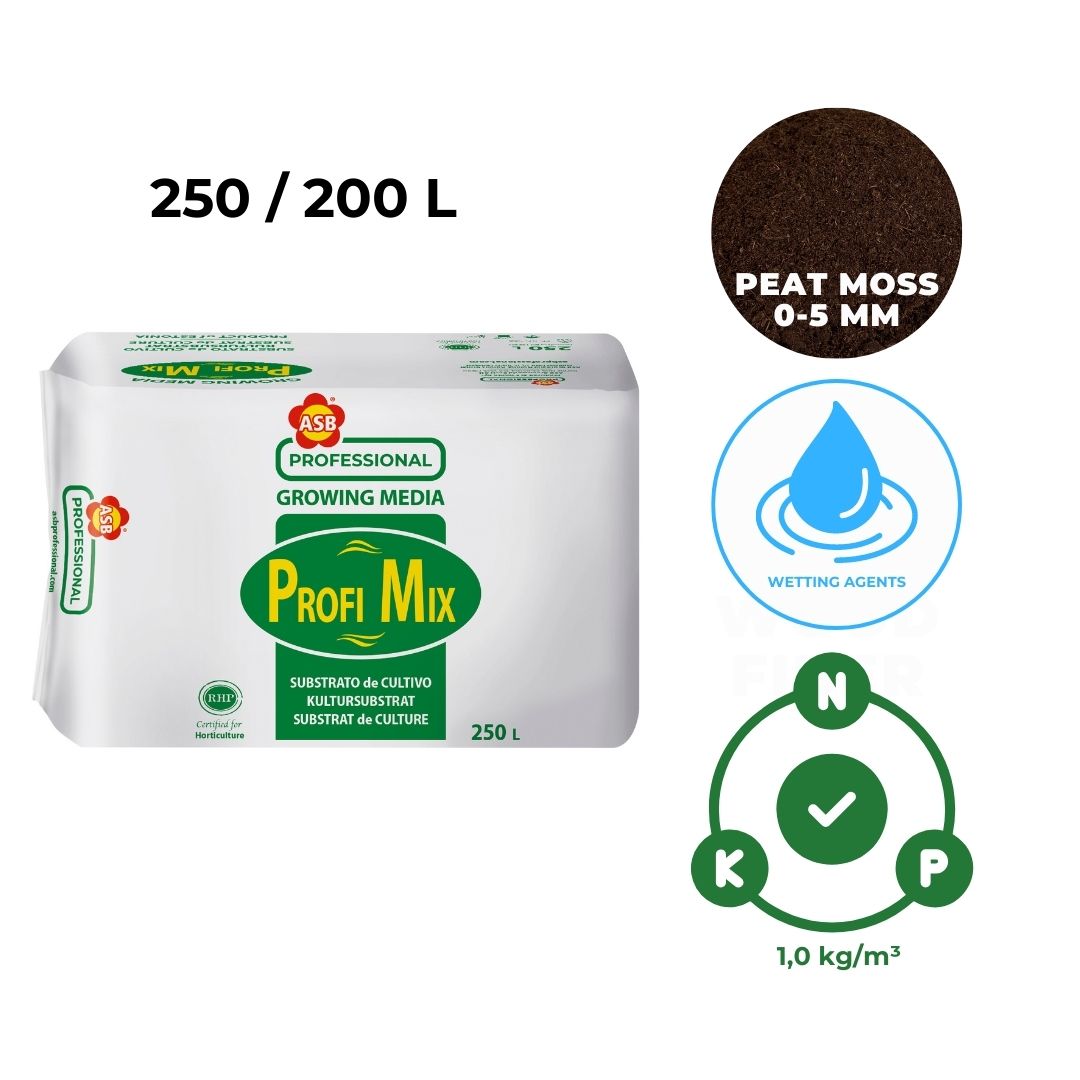
ASB Professional Substrate 0-5 WA NPK
A strong fit for propagation teams that need fine structure, uniform tray fill, and stable early moisture management.
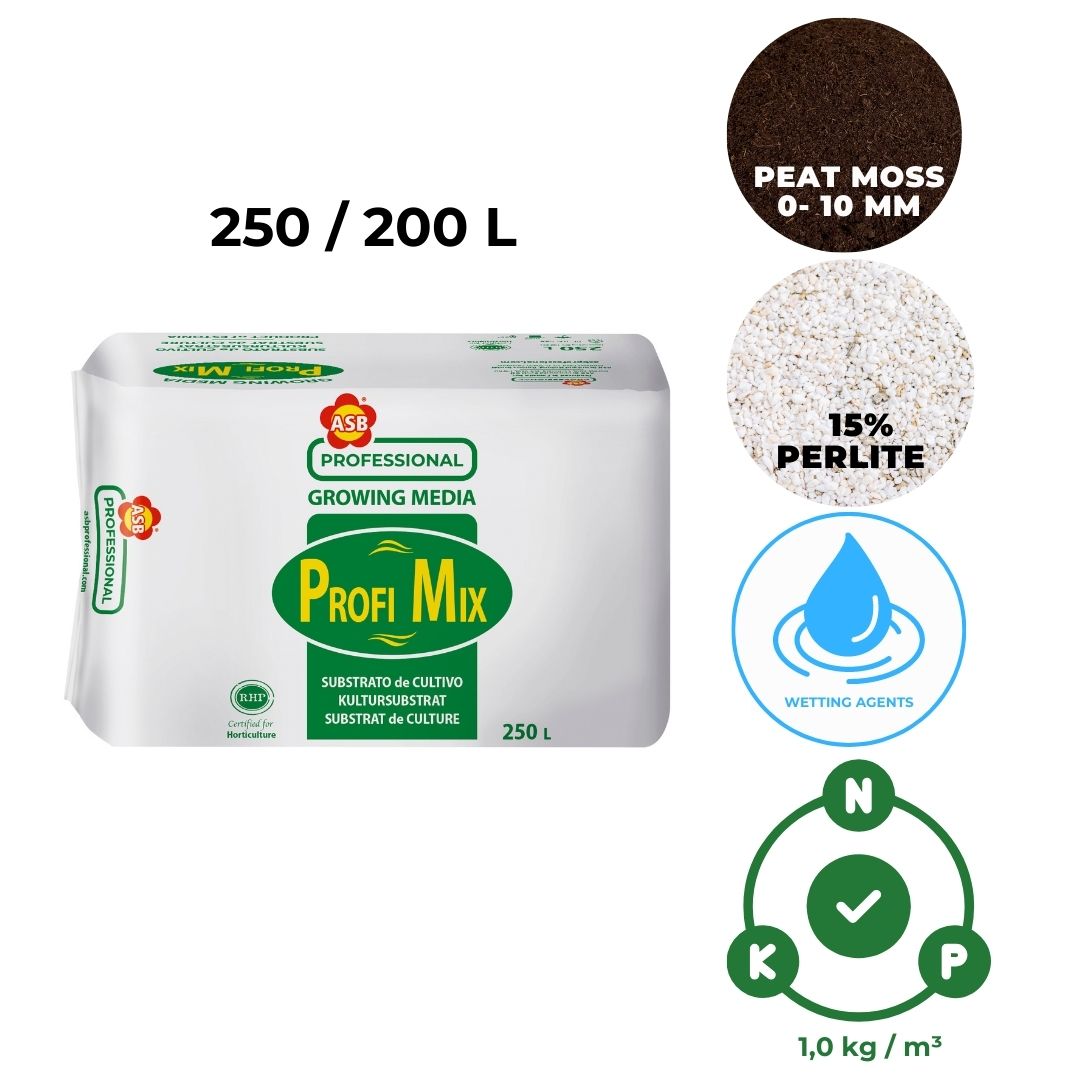
ASB Professional Substrate 0-10 Perlite
Recommended when young plant programs need a fine propagation structure with added air movement and drainage support.
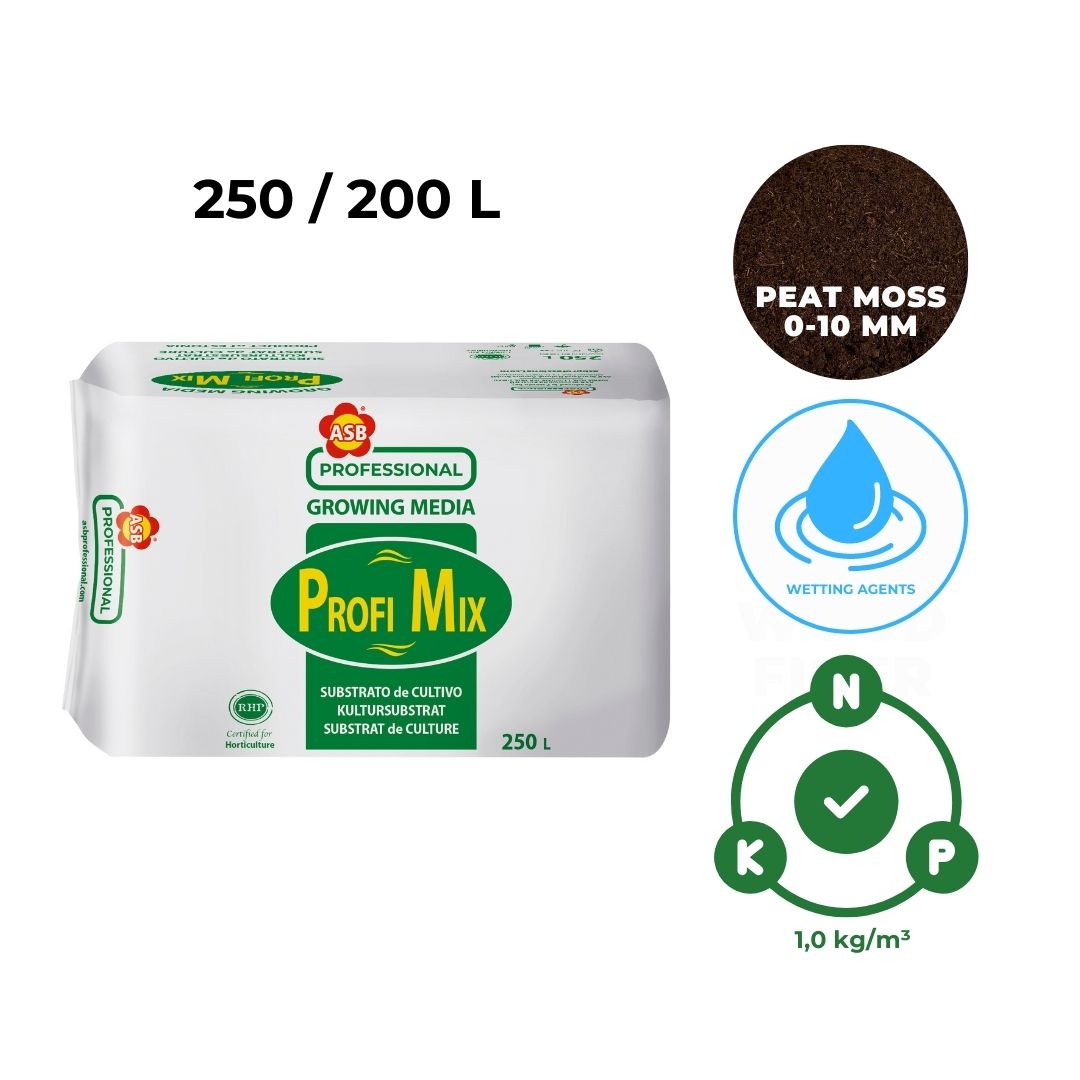
ASB Professional Substrate 0-10 Fertilizer
A practical baseline for broad seedling and young plant workflows that need clean 0-10 mm structure and starter nutrition.
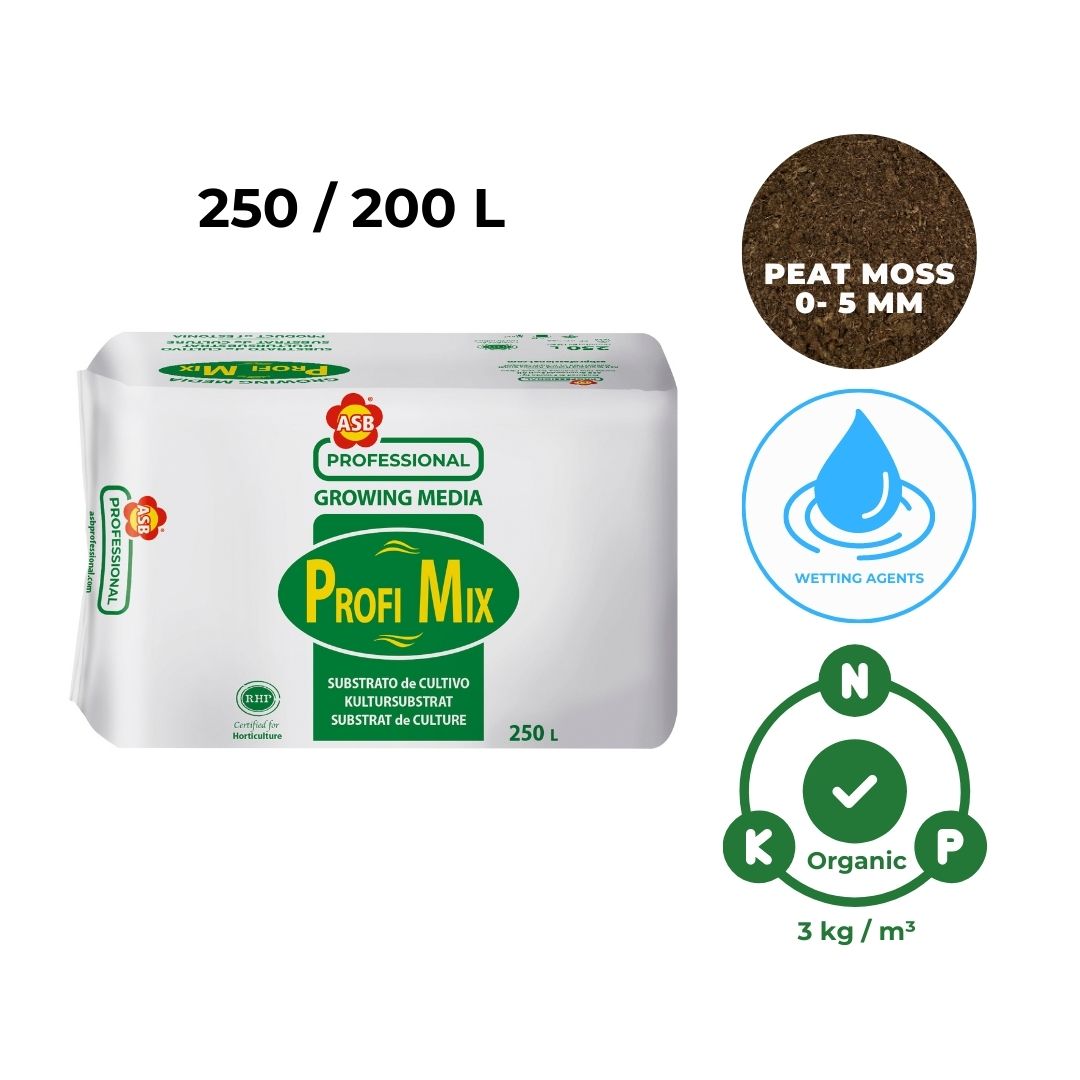
ASB Professional Substrate 05 pH
A priority Worldwide category for buyers evaluating organic herb, leafy green, and lower-input greenhouse programs.
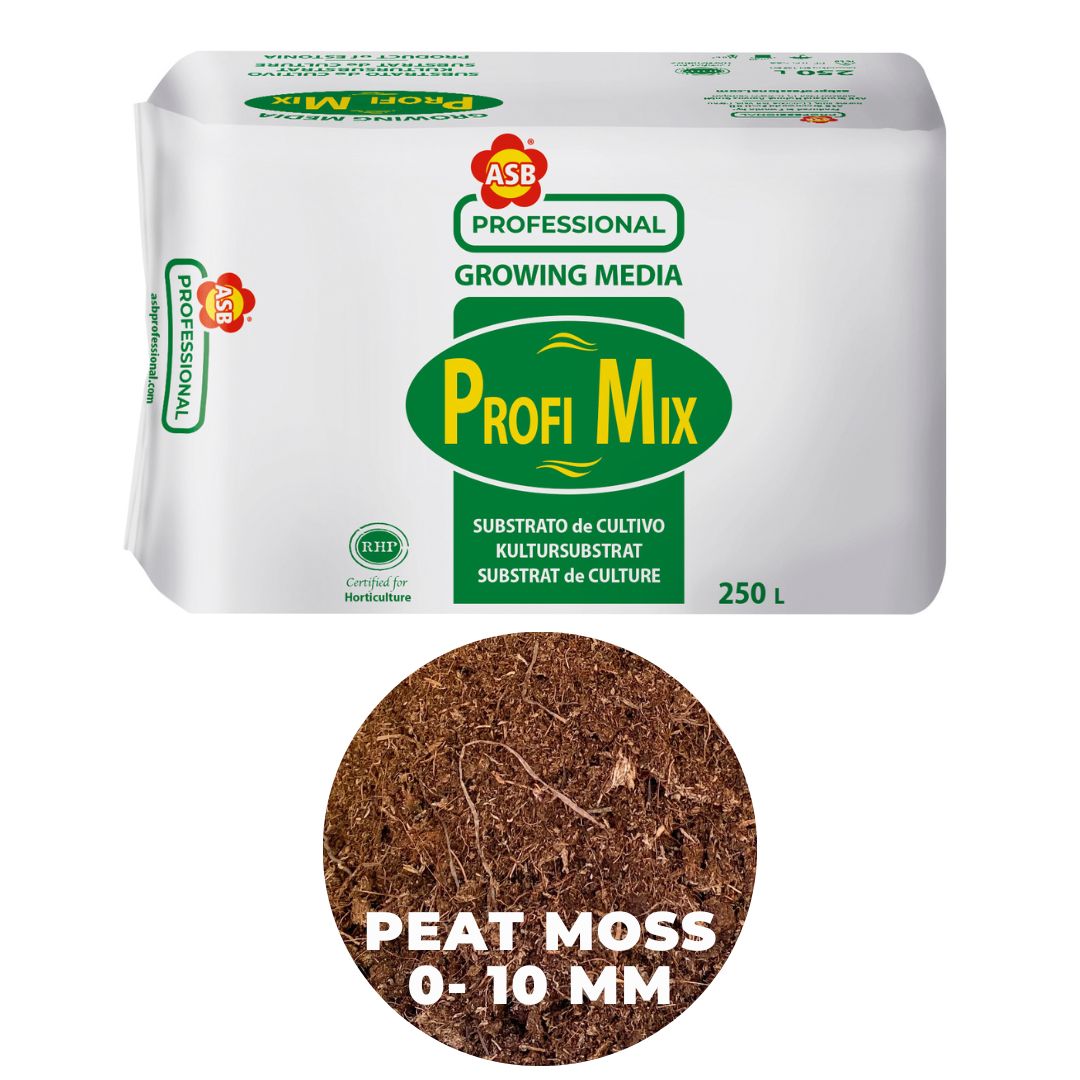
ASB Blueberry Peat Base WP010
A dedicated Worldwide category for acidic crop programs, blueberry farms, and berry container production.

ASB Growing Grade Peat Moss
A North America product page for buyers comparing bulk peat moss supply, bale formats, and seasonal procurement.
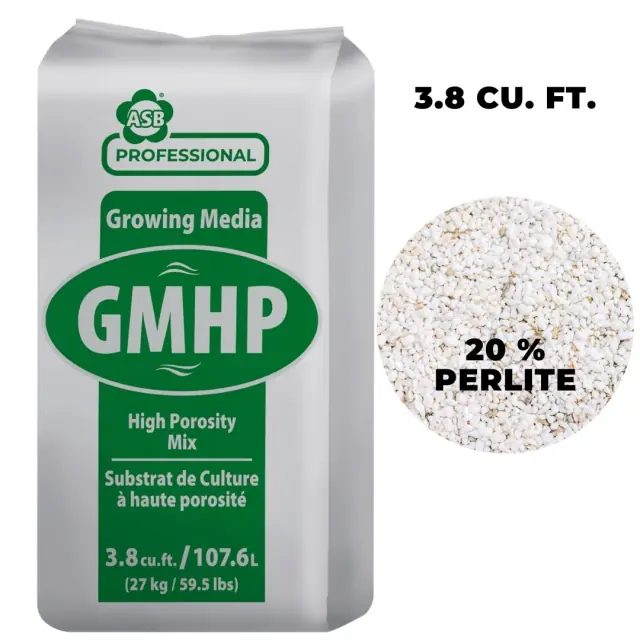
ASB Grower Mix 20
A North America high-porosity mix for greenhouse programs that need stronger air space and drainage behavior.
Quick comparison: choosing a seed and propagation mix
| Criteria | Fine 0-5 mm Seed Mix | 0-10 mm Propagation Mix |
|---|---|---|
| Primary use | Fine plug work, seed germination, uniform tray fill | Seedlings, liners, young plants, broader propagation workflows |
| Operational priority | Tight structure, moisture consistency, and uniform early emergence | Balanced structure, root development, and handling flexibility |
| Typical buyer question | Can this reduce variability across small cells and seed trays? | Can this support young plants across a wider propagation program? |
FAQ
What is the most important factor when choosing a commercial greenhouse substrate supplier?
For most operations, repeatable quality and logistics reliability together are the highest-impact criteria. A low initial price usually does not offset in-season variability costs.
Should we prioritize standard mixes or custom mixes?
Start with proven standard mixes where possible, then customize only where there is clear technical value for crop performance, irrigation behavior, or labor efficiency.
How many suppliers should we benchmark before deciding?
Benchmark at least two to three serious candidates using the same weighted scorecard. This prevents one-sided evaluations and improves negotiation quality.
When should seasonal substrate planning start?
Start as early as possible before peak season, especially when specific packaging formats, truckload windows, and category-specific files are required.
Need a practical supplier evaluation for your greenhouse program?
The ASB Professional team can review your current substrate setup, help map risk points, and recommend a category-level product shortlist for your next purchasing cycle.
This article is part of the ASB Professional Blog and highlights topics across events, sustainability, and technical growing media expertise. ASB Greenworld Eesti is listed as a member of the Estonian Peat Association (Eesti Turbaliit).
It helps customers and partners follow company developments, market activity, and product-related topics.
ASB Professional Editorial Team