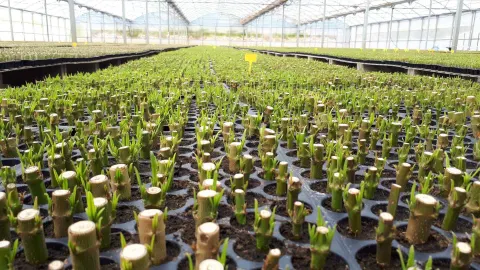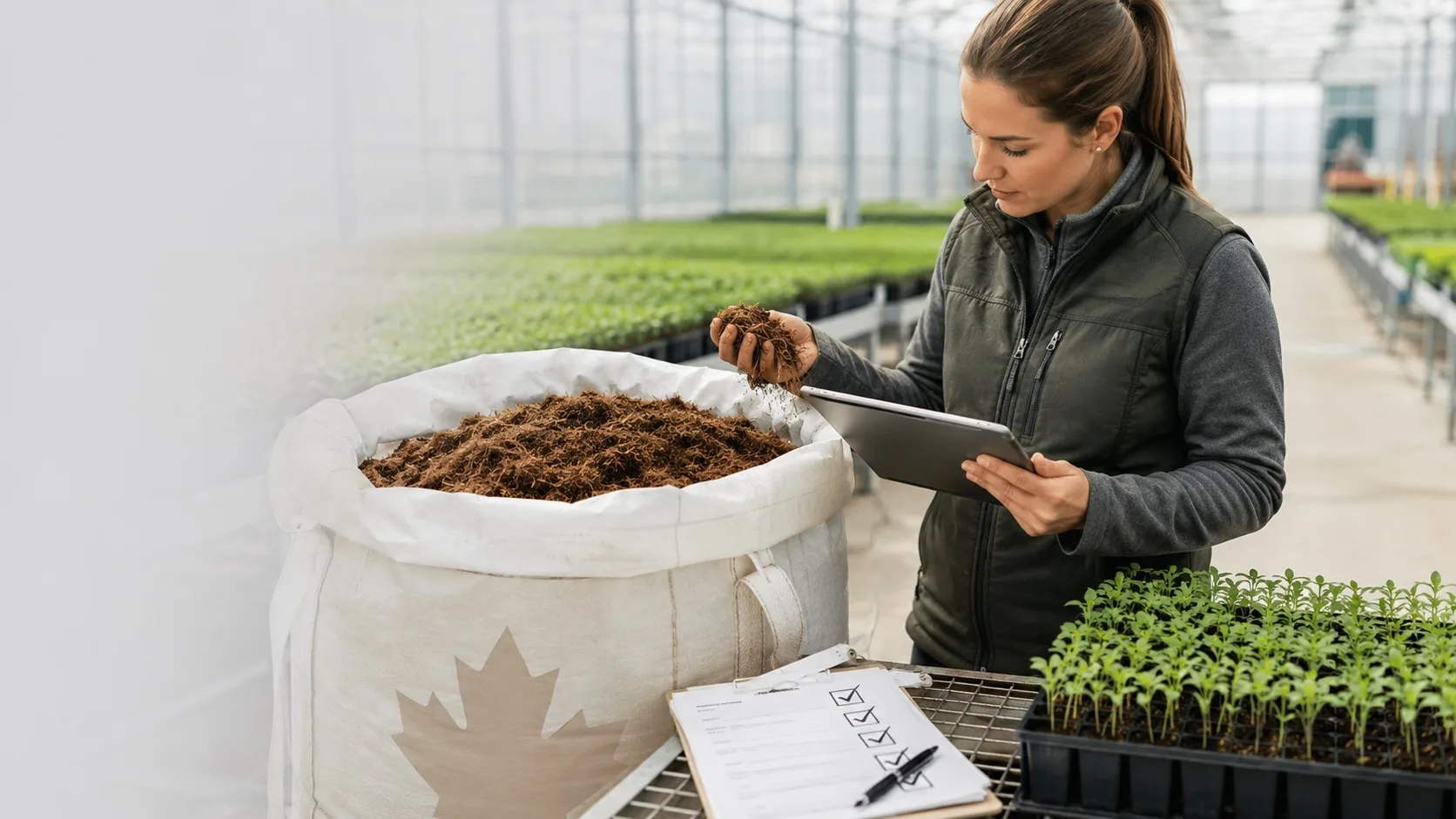
Seedling mixes have a direct impact on germination uniformity, tray filling, early root development, irrigation control, and labor correction. This guide helps commercial growers and procurement teams evaluate propagation substrates before annual commitments.
- Uniform germination starts with the physical behavior of the seedling mix, not only with seed quality.
- Large propagation programs should compare particle structure, moisture distribution, pH, starter nutrition, tray filling, and correction workload.
- A seedling mix that performs well in one tray format may not behave the same way in another cell size or filling line.
- Supplier support matters because early propagation issues multiply quickly across thousands or millions of cells.
- Before annual commitments, run a controlled trial and score the mix on fill quality, germination uniformity, root development, and labor correction.
Why seedling mix selection matters:
Seedling mixes are a small line item compared with the value of the crop they support, but they can create a large operational effect. When germination is uneven, the problem spreads quickly into spacing, grading, irrigation, labor planning, and delivery timing.
For large propagation programs, the question is not only whether a seedling mix can grow a plant. The question is whether it can support repeatable tray filling, even moisture, consistent emergence, strong early roots, and low correction work across many batches.
A practical way to think about it:
A good seedling mix should make the early crop stage easier to control. It should fill trays evenly, hold enough water for uniform germination, allow oxygen into the young root zone, re-wet predictably, and support the crop until transplant or next-stage production.
If the mix creates uneven fill, wet corners, dry cells, slow emergence, weak roots, or repeated correction work, the cost is not only the substrate price. It becomes a production risk.
7 specs that affect uniform germination:
1. Particle structure:
Structure controls how the seedling mix fills the tray, how closely it contacts the seed, how evenly it holds water, and how much air remains in the cell after irrigation.
Fine 0-5 mm structures can support tight fill and close seed contact. Broader 0-10 mm structures can provide more openness and may support young-root development in programs that need stronger air movement. In parts of the Middle East and North Africa, these fine nursery products may be requested as potting soil; Potting Soil for Vegetable Seedlings explains why the quotation needs to state the full bagged-product specification rather than the name alone. For the corresponding considerations in a cutting programme, see Substrate for Plant Cuttings, including a real large-tray Nerium oleander case.
2. Moisture distribution:
Uniform germination depends on even moisture across the tray. A mix that looks acceptable in the bag can still behave poorly if water distribution is uneven after filling or after the first irrigation cycles.
Large buyers should ask how the mix performs across the full tray, not only in a single handful or one test cell.
3. Re-wetting behavior:
Propagation teams need predictable re-wetting. If some cells take up water quickly while others resist water, germination timing can split and the team may need extra correction work.
Wetting-agent support can be important when a crop program needs more controlled hydration during early development.
4. pH and starter nutrition:
The early root zone needs a stable starting point. pH, EC, and starter fertilizer should match the crop program and the expected time in the tray.
Too little support can slow early growth. Too much can create risk for sensitive seedlings. The right answer depends on crop, water quality, fertilizer strategy, and propagation length.
5. Air movement in the cell:
Seedlings need moisture, but roots also need oxygen. A mix that stays too wet can reduce root-zone recovery and create uneven early development.
Perlite support or a slightly more open structure can help when the crop program needs stronger air movement, but irrigation must be adjusted to the structure.
6. Filling-line behavior:
A seedling mix must work in the real filling process. Flow, compaction, tray wipe-off, dust level, and consistency after handling all affect labor and crop uniformity.
For larger operations, a mix that performs well technically but slows the line or fills inconsistently can still be the wrong commercial choice.
7. Packaging and supply planning:
Propagation schedules are sensitive. The supplier must support the right packaging format, seasonal delivery windows, documentation, and repeatable product quality.
This matters especially for export programs, large seasonal commitments, and teams that need the same substrate behavior across multiple production blocks.
How larger companies should evaluate a seedling mix:
Start with a production-level trial, not only a lab review. Use the same tray, filling line, seed lot, irrigation routine, and greenhouse conditions that will be used in the real program.
Score each candidate on fill consistency, moisture uniformity, emergence timing, germination percentage, root development, transplant readiness, reject rate, and labor correction.
Procurement and production should review the result together. A lower-cost substrate is not cheaper if it increases rejects, creates uneven batches, or demands more labor correction.
Common mistakes:
One common mistake is choosing only by structure label. Two 0-10 mm seedling mixes can behave differently depending on peat quality, additives, moisture, handling, and production consistency.
Another mistake is judging the mix too early. Germination, early root formation, and transplant readiness should be evaluated across several irrigation cycles, not only after the first watering.
A third mistake is separating procurement from growing decisions. Seedling mix selection should be agreed between purchasing, propagation, and operations because all three teams carry the impact.
Practical buyer checklist:
Before annual commitments, ask: Does the mix fill the tray evenly? Does it hold moisture uniformly? Does it re-wet predictably? Does pH and starter nutrition match the crop? Does root development support transplant timing? Does the packaging fit the line? Can the supplier support documentation and repeatable delivery?
The best seedling mix is not the one with the longest specification sheet. It is the one that helps your team produce uniform young plants with fewer corrections, fewer rejects, and a more predictable propagation schedule.
Recommended ASB products
These products are commonly evaluated with the strategy covered in this article.
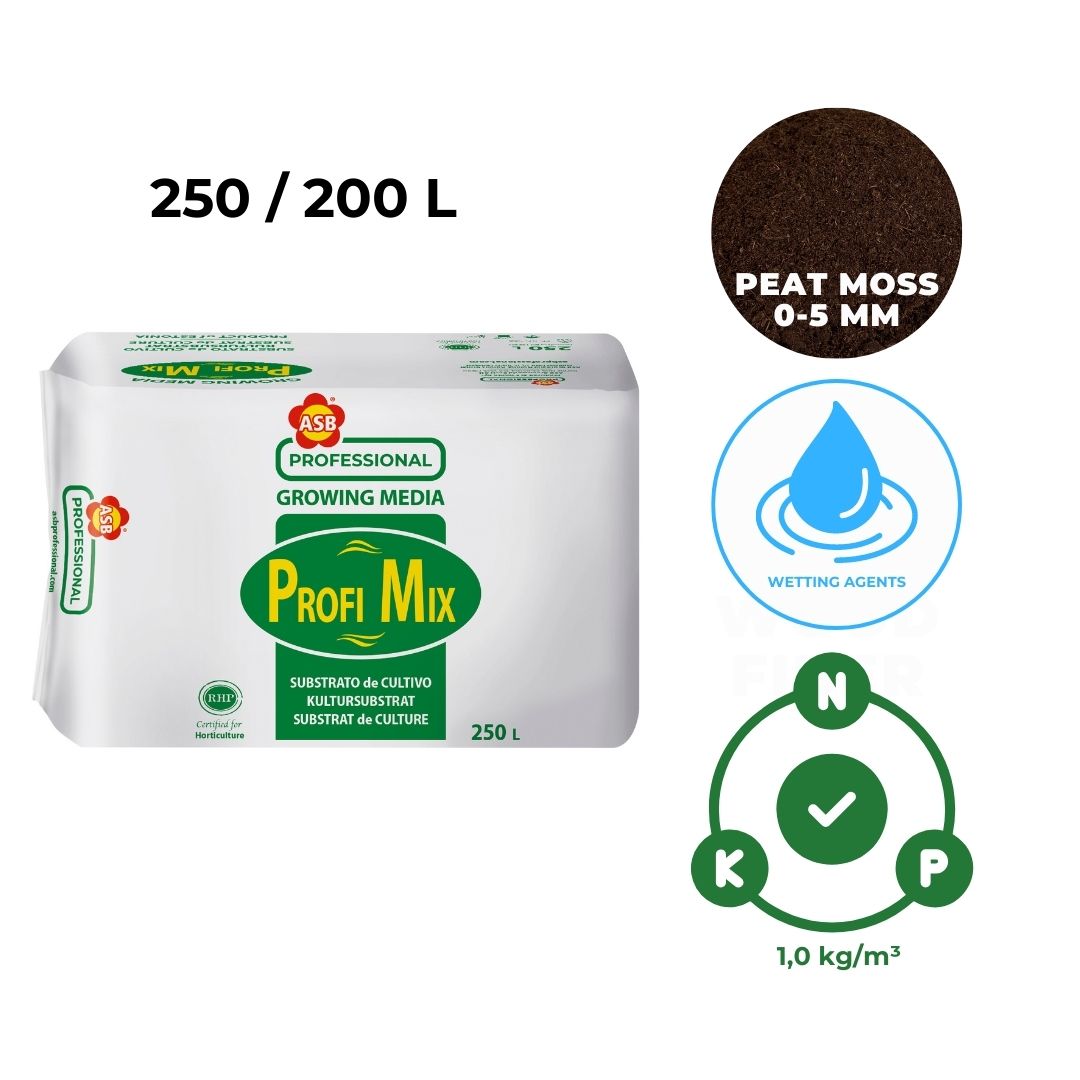
ASB Professional Substrate 0-5 WA NPK
A very fine propagation option for plug work where tight fill, moisture control, and early-stage uniformity are priorities.
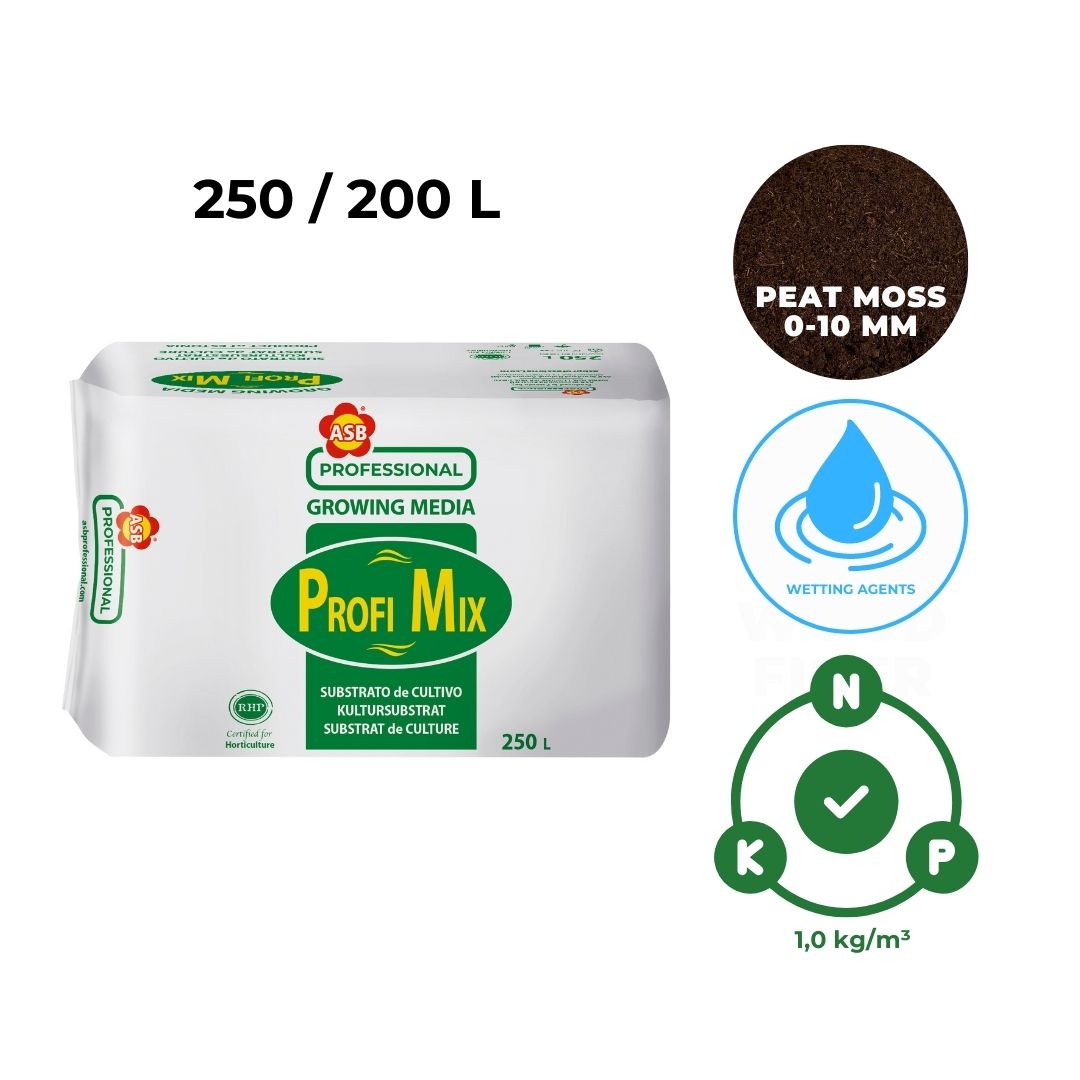
ASB Professional Substrate 0-10 Fertilizer
A broader young-plant substrate direction for propagation programs that need a clean structure and nutrient support.
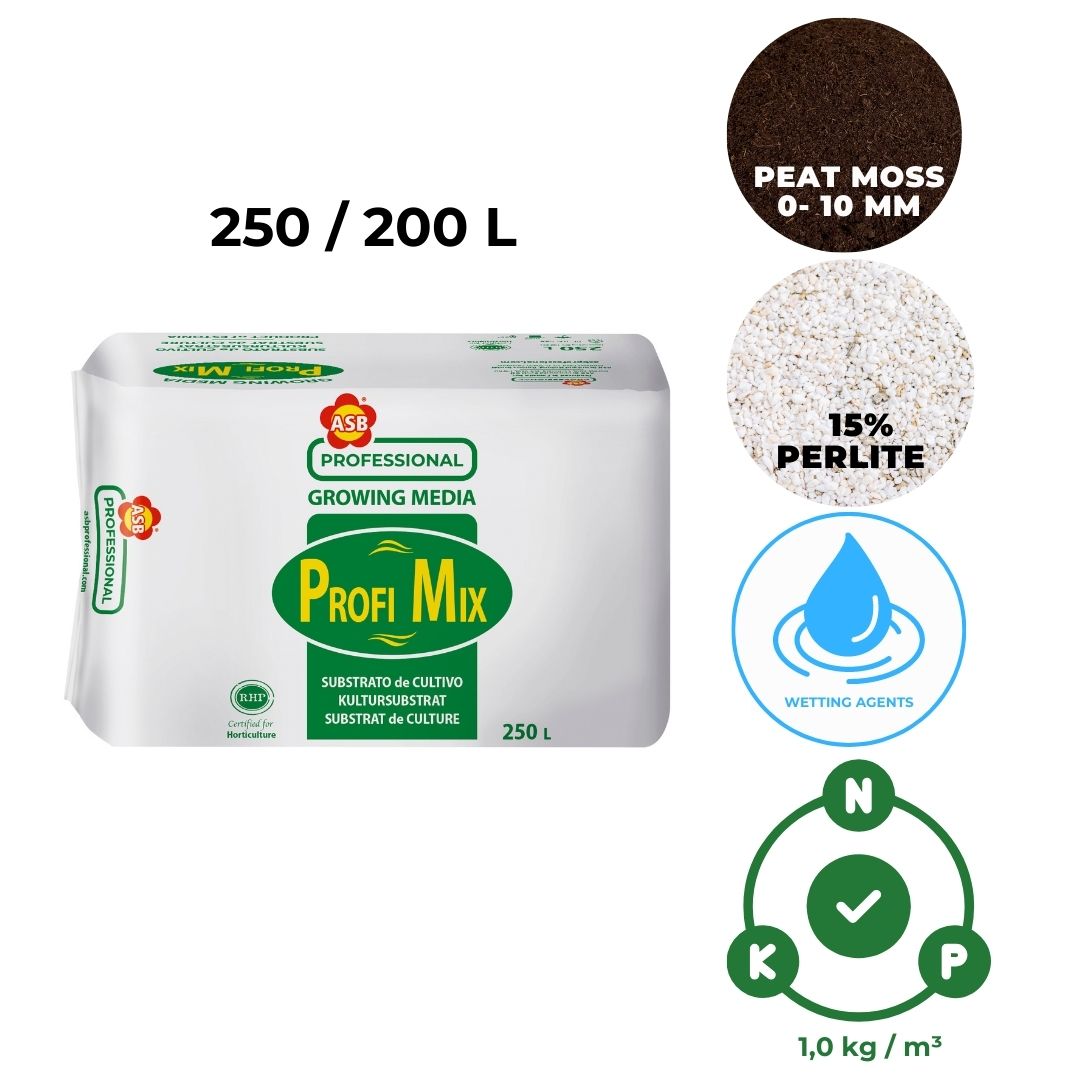
ASB Professional Substrate 0-10 Perlite
A propagation formula for programs that need more air movement while keeping a fine structure for trays and young plants.
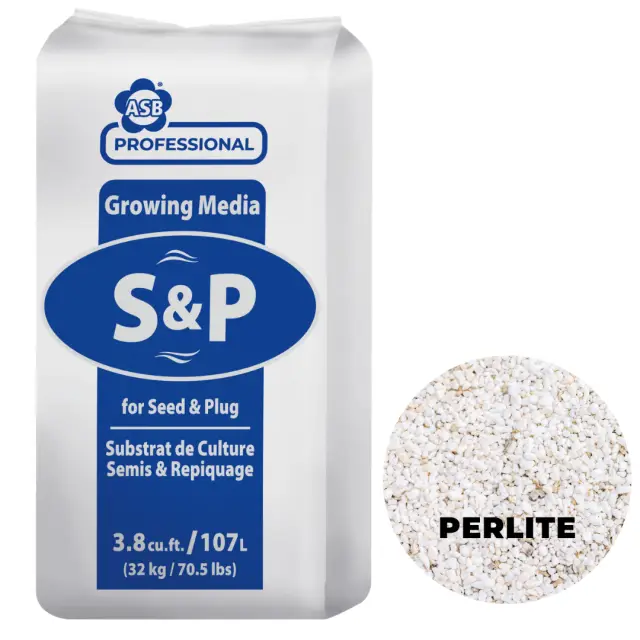
ASB Seed & Plug Mix
A seed and plug mix for commercial tray, plug, liner, and young plant workflows in USA and Canada.
Quick comparison: fine vs more open seedling mixes
| Criteria | Fine 0-5 mm seedling mix | 0-10 mm seedling mix with air support |
|---|---|---|
| Main strength | Tighter tray fill, close seed contact, and controlled early moisture | More structure, improved air movement, and stronger young-root recovery |
| Best fit | Fine plug work, smaller cells, and crops where even emergence is the first priority | Larger cells, young plants, and programs where root-zone air movement is more important |
| Irrigation impact | Can hold moisture more evenly but must not stay saturated | May recover faster after watering but still needs even moisture distribution |
| Typical buyer question | Do we need tighter fill and very even germination conditions? | Do we need more air movement for young-root development? |
| Watch-out | Fine structure can become a risk if watering keeps the cell too wet for too long | More open structure can expose uneven watering or tray-fill variation faster |
FAQ
What makes seedling mixes different from general potting mixes?
Seedling mixes are built for early-stage propagation, where tray filling, fine structure, moisture distribution, pH, starter nutrition, and root contact must be controlled more tightly than in many finishing substrates.
Is a finer seedling mix always better for germination?
No. A fine structure can support seed contact and uniform fill, but it must still drain and re-wet correctly. The best structure depends on seed size, cell size, crop sensitivity, and irrigation control.
When should a propagation program consider perlite support?
Perlite support can make sense when the program needs more air movement, faster recovery after watering, or better young-root oxygen availability while still keeping a tray-friendly structure.
What should large buyers test before changing seedling mixes?
Test tray fill, germination percentage, emergence timing, moisture distribution, root development, transplant readiness, reject rate, and correction labor before switching a full propagation program.
Planning a larger seedling mix commitment?
The ASB Professional Worldwide team can help compare seed and propagation mixes by crop program, tray format, irrigation style, packaging needs, and export planning.
This article is part of the ASB Professional Blog and highlights topics across events, sustainability, and technical growing media expertise. ASB Greenworld Eesti is listed as a member of the Estonian Peat Association (Eesti Turbaliit).
It helps customers and partners follow company developments, market activity, and product-related topics.
ASB Professional Editorial Team