To receive a fast, accurate quote from ASB Professional, send the intended use, exact product, packaging format, trial and first-shipment quantities, seasonal forecast, delivery site, Incoterms rule with a named place and required documents.
To receive a fast, accurate quote for bulk peat moss or growing media from ASB Professional, send our sales team the intended use, exact product, packaging format, trial and first-shipment quantities, seasonal forecast, delivery site, Incoterms® 2020 rule with a named place and required documents. This guide explains each point and provides a request template that can be copied into an email or procurement form.
A request such as “Please quote one container of peat moss” sounds clear, but it leaves most of the commercial work unresolved. Which material is required? Which package can the buyer unload? Where must the goods arrive? Who arranges the main transport? Which documents must travel with the shipment?
A complete brief answers those questions before the offer is priced. The result is a quotation that fits the buyer’s actual operation the first time, with fewer clarification rounds and no surprises when the goods arrive.
Start with the job the material must perform
The first line of the brief should state whether the buyer needs a raw material for local blending or a finished growing medium for direct crop use. Those are different purchases, and ASB Professional supplies both: defined raw peat fractions for substrate producers and ready-to-use growing media for growers and distributors. A local substrate producer may need a defined raw peat fraction for an existing recipe. A grower may need a finished mix matched to a crop and production system. A distributor may need a market-ready product in a specific bag format.
Name the crop, customer group or manufacturing purpose in one sentence. “Raw white peat for local propagation-mix production” gives the sales team more direction than “peat moss”. “Finished growing medium for commercial vegetable seedlings” is more useful than “potting soil”. The commercial name can vary between markets, so the intended use should remove the ambiguity.
Identify the product without rebuilding the whole technical specification
If an ASB product has already been selected, include its exact product name or code. If it has not, describe the product level, intended use and any non-negotiable specification points. Attach the current product sheet or agreed sample reference where available.
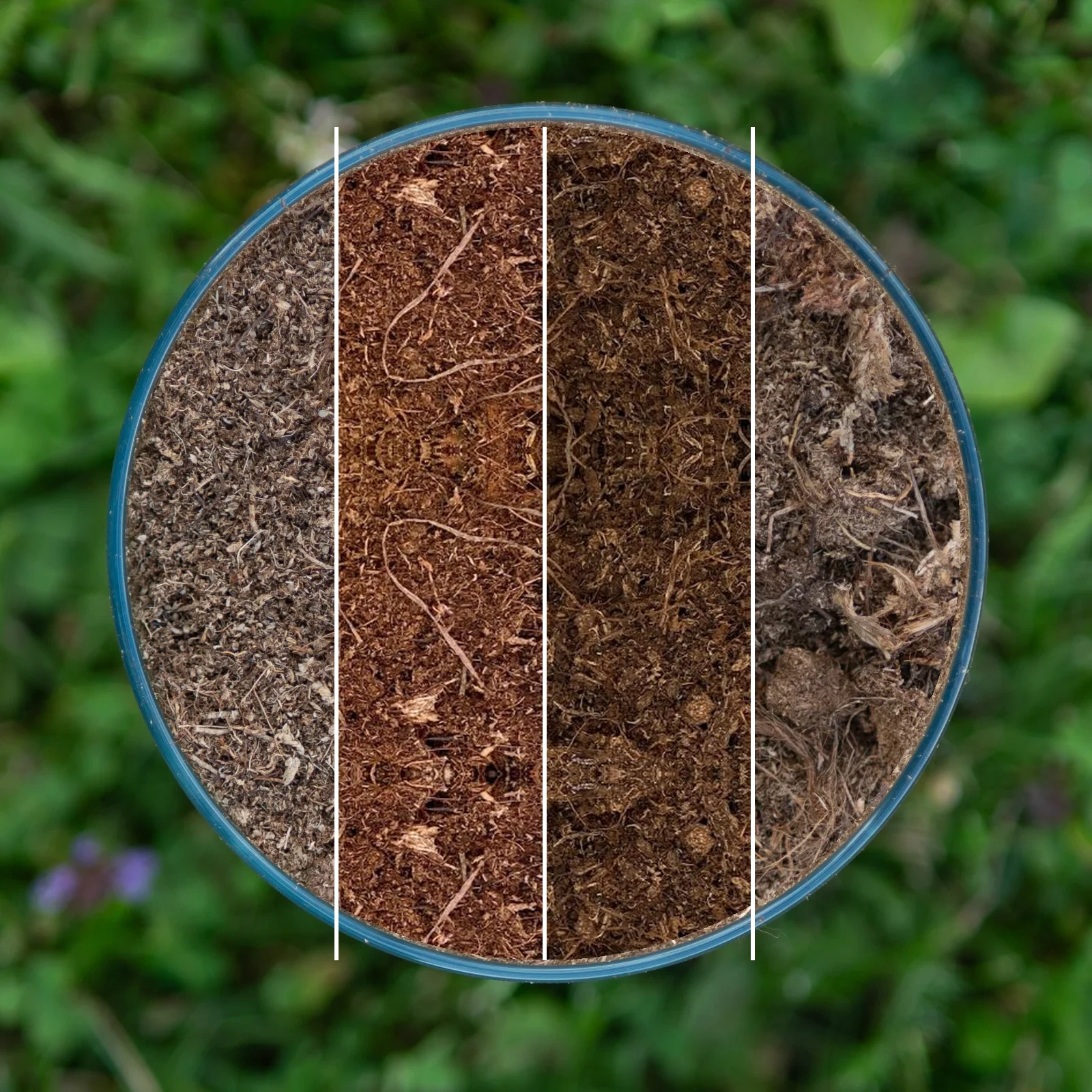
Keep the commercial specification concise. ASB Professional products are produced to a documented specification under RHP certification, so the specification named in the brief is the specification delivered. The export brief only needs to identify which specification is being quoted and who must approve any change. Buyers still selecting a raw peat fraction can use Compare Peat Moss Fractions: 0-5 to 0-40 mm as a starting point. When pH or EC is part of the specification, Peat Moss pH and EC explains why the test method and units must also be stated.
Choose packaging that the destination can actually handle
A packaging decision affects more than the number printed on the bag. The buyer needs to consider unloading equipment, door and warehouse access, covered storage, internal movement, batch separation and the rate at which production will consume the material.
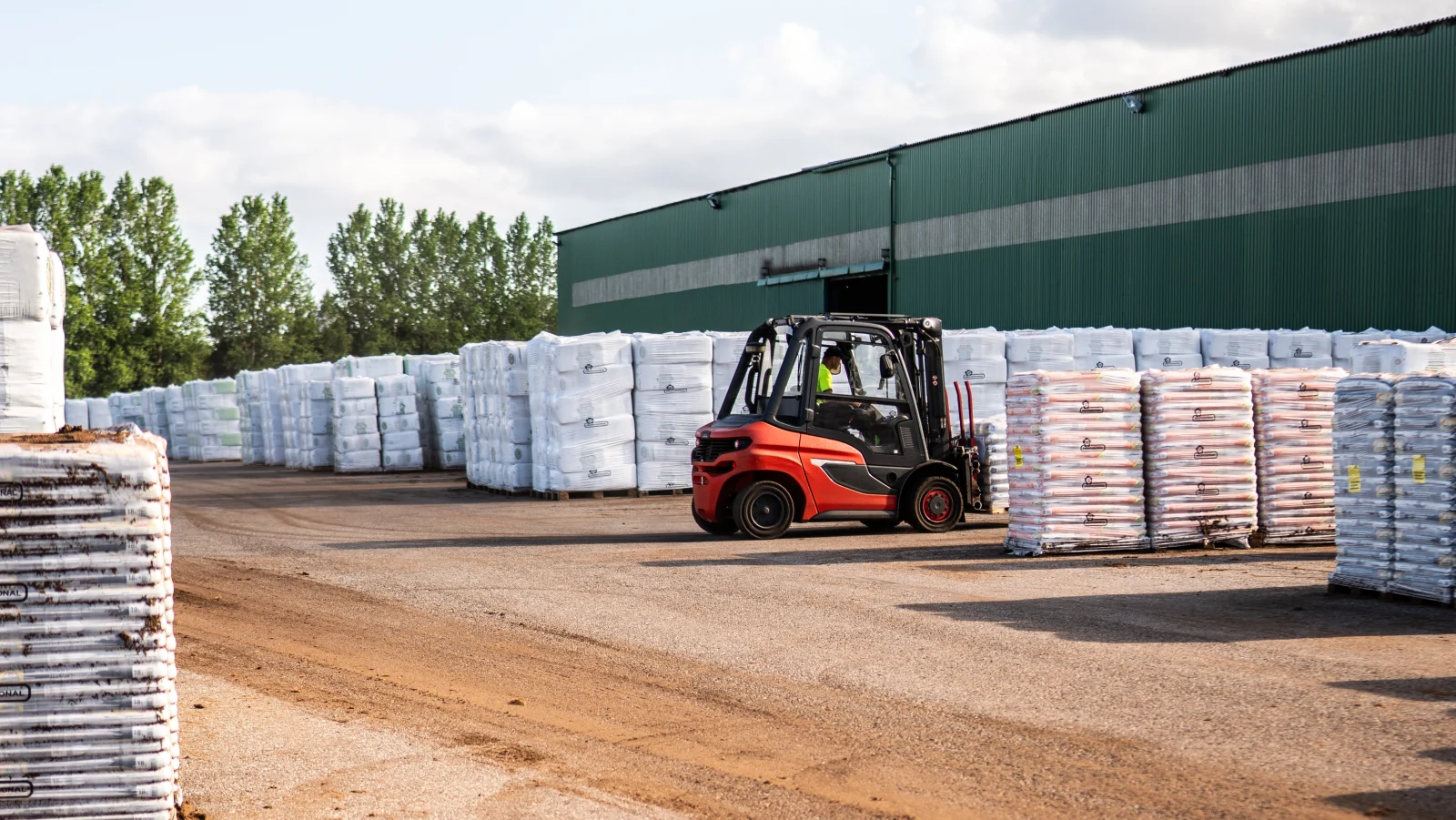
ASB Professional offers one of the broader format ranges in the sector. Worldwide raw-material, potting, seed-and-propagation and organic ranges currently cover formats from 50 L and 80 L bags through 200 L and 250 L packs to 5,800 L big bales, depending on the product. Mushroom-farm products have their own listed formats. The brief should therefore name the required product and packaging combination, so the sales team can confirm it directly.
A large bale reduces the number of individual packages handled, but it only creates value if the receiving site can unload, store and process it. Smaller bags may fit manual or distributed use better. Ask the receiving team before asking the supplier to optimise the shipment around a format the site cannot use.
Separate forecast volume from the first shipment
The sales team needs more than one quantity. A useful brief distinguishes among the trial quantity, first commercial shipment, expected seasonal volume and likely reorder rhythm.
| Quantity field | What the buyer should state | Why it matters |
|---|---|---|
| Trial or approval quantity | Amount needed for testing or customer approval | Prevents a trial from being mistaken for the full commercial programme |
| First shipment | Required product and package count for the initial delivery | Gives the supplier a shipment to price and plan |
| Seasonal forecast | Expected volume over the relevant production or sales season | Supports capacity and raw-material planning |
| Reorder pattern | One-off, monthly, call-off or another schedule | Helps align production, storage and transport |
A forecast is not the same as a confirmed order. Label it clearly. If demand depends on a tender, customer approval or crop result, say so instead of presenting the highest possible volume as committed demand. A realistic forecast lets ASB plan production and secure transport capacity ahead of the season.
Define the destination as an operating location
A country name is not enough for a logistics quotation. Provide the delivery city, postal code, receiving site and preferred port or terminal if one has already been selected. State whether the site can receive a full container or truck, whether an appointment is required and how the goods will be unloaded.
Also identify the importer or consignee responsible for local formalities. Import requirements vary by destination and product, so the importer should confirm current national requirements with the competent authorities. ASB Professional’s export team can share the document sets it regularly supplies for that market, such as a Certificate of Origin, phytosanitary certificate, quality certificate, ATR or EUR.1.
Agree the delivery responsibility, not only the freight price
The quotation should name the agreed Incoterms® 2020 rule and the precise named place or port. ICC explains that the rules allocate defined tasks, costs and risks between seller and buyer, including transport, delivery, insurance and customs responsibilities. Writing only “FOB”, “CIF” or “delivered” without a named location leaves room for disagreement.
The commercial teams should establish who books the main carriage, where risk transfers, who handles export and import clearance, whether insurance is included and who pays destination charges. ASB Professional quotes on EXW or CIF terms and can advise which rule suits the buyer’s transport arrangement. The chosen sale term must also align with the actual carriage and document arrangements; Incoterms® do not replace the transport contract.
Confirm documents before the order is released
Document needs should be listed in the brief, not discovered when the goods are ready to move. The exact set depends on the product, destination, sale term and customer requirements. The buyer should list the commercial, customs, plant-health, quality, origin and product documents and any certificates required, and state whether originals, electronic copies or specific wording are needed. ASB Professional routinely provides phytosanitary certificates, certificates of origin and other necessary documents.
Wood packaging deserves a separate check. ISPM 15 applies to regulated wood packaging such as pallets, crates and dunnage used in international trade. ASB Professional ships on ISPM 15-compliant pallets, and destination implementation should still be checked for the actual shipment.
Record how the product was approved
If a sample or trial is needed, ASB records the product reference and sample date with the buyer’s order, and the buyer records the trial location, responsible reviewer and written decision. Keep any approved specification or artwork with the purchase record. “Customer approved” should point to a traceable sample or document, especially when a distributor is buying for another customer.
For how ASB keeps later deliveries consistent with the approved specification, see Growing Media Batch Consistency: How It Is Secured and What Buyers Can Verify.
What a complete ASB offer covers
The lowest product price is not necessarily the lowest usable cost at the receiving site. An ASB Professional offer sets out the product and packaging, main transport, origin charges, insurance where agreed and the shipment documents, so the buyer sees what the material will cost to receive and use, not only a price per litre, bale or tonne.
A quotation that assumes the wrong destination, package, delivery term or document set is not usable, however attractive the price. That is why ASB confirms these points with the buyer before the offer is finalised.
Use this request template
Complete the relevant fields below and send the brief to ASB Professional sales.
- Company and contact
- Buyer role: grower, distributor or substrate producer
- Product required: ASB product name or code, or raw material versus finished mix
- Intended use: crop, customer group or local blending purpose
- Required packaging: package size and preferred format
- Trial quantity, if applicable
- First commercial quantity: package count or required volume
- Seasonal forecast: expected total and reorder pattern
- Destination: delivery address, postal code, country and preferred port or terminal
- Receiving capability: truck or container access, appointment and unloading equipment
- Requested Incoterms® 2020 rule and precise named place
- Target delivery window
- Importer or consignee
- Required documents and certificates
- Sample or approval reference
- Other non-negotiable requirements
Send the brief to ASB Professional
Send the completed brief to the relevant sales contact. The commercial team will confirm the right product path, current packaging availability, loading quantities, production timing, transport options and destination documents for the specific order.
Buyers can review current Worldwide product families and packaging references before sending the request. The Service & Logistics page provides the direct route to export support, while What Is a Professional Growing Media Supplier? explains what to expect from a supplier behind a repeat commercial programme.
In short: state what the material must do, name the product and a package the site can handle, and separate trial, first-shipment and forecast quantities. Give a real delivery address, an Incoterms® 2020 rule with a named place and the documents required. With that brief, ASB Professional can return a workable offer the first time.
Sources for the trade-planning points in this guide include the International Chamber of Commerce overview of Incoterms® rules and the International Plant Protection Convention guidance on ISPM 15 wood packaging material.
Recommended ASB products
These products are commonly evaluated with the strategy covered in this article.
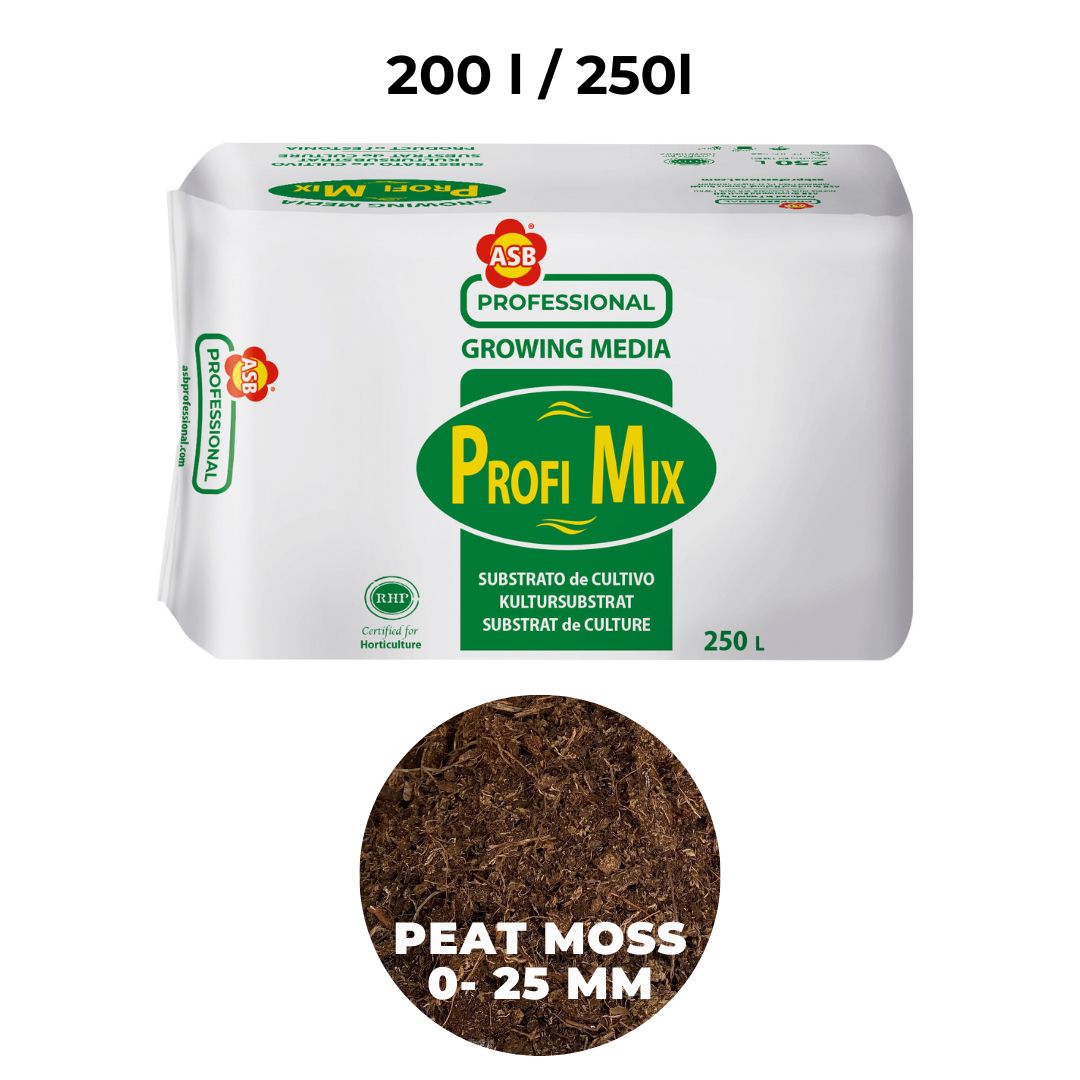
ASB Professional Substrate WP025
A 0-25 mm white peat fraction for buyers sourcing a documented raw material for their own substrate production and export programme.

ASB Professional Substrate 0-25 WA
A pH-adjusted 0-25 mm growing medium with wetting agent for buyers who need a finished professional mix rather than a raw blending component.
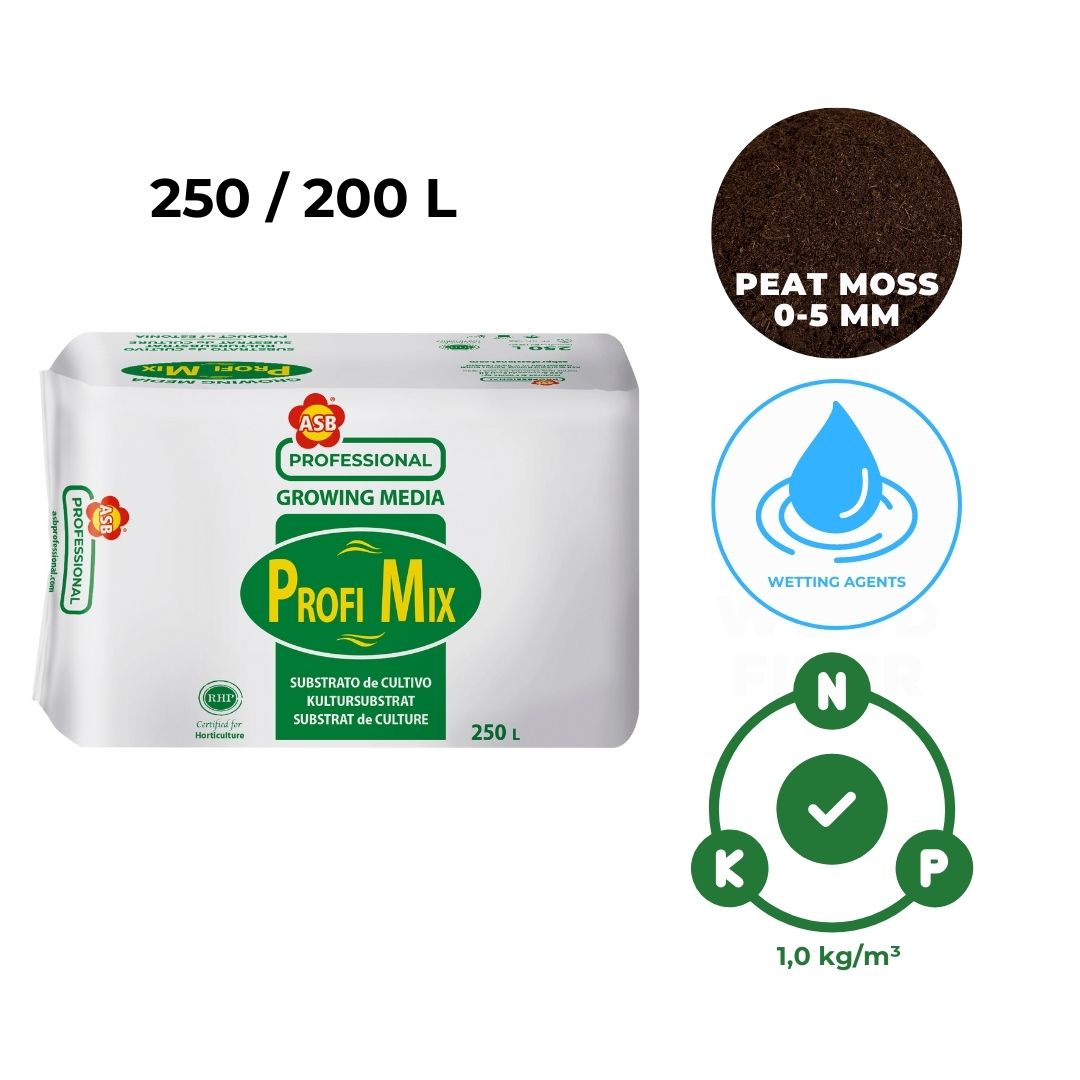
ASB Professional Substrate 0-5 WA NPK
A fine 0-5 mm substrate with wetting agent and starter nutrition for commercial seedling and propagation programmes.
FAQ
How much peat moss fits in a 40 ft container?
It depends on the product, package format, pallet or floor-loading configuration, route and weight limits. As a guide, a 40 ft high-cube container typically takes 24 big bales or 540 palletised 250 L bales. ASB Professional confirms the exact loading quantity in every quotation.
What is the minimum order for bulk peat moss or growing media?
ASB Professional supplies trial quantities only in full truckloads or 40 ft high-cube containers for approval, as well as full commercial shipments. State the trial and first commercial quantities separately so the sales team can confirm the best option for that order.
Does exported peat moss need a phytosanitary certificate?
Many destinations require one, depending on product classification and national rules. ASB Professional provides phytosanitary certificates for export shipments where required; the importer should confirm current destination requirements with the competent authorities.
Should a peat moss buyer request FOB or CIF?
Neither rule is automatically best. Choose the Incoterms® 2020 rule that matches who arranges carriage, insurance and customs formalities, and include the precise named port or place. ASB Professional can quote on several rules and advise which suits the buyer’s transport arrangement.
How long does a bulk growing media export order take?
Typical lead time from confirmed order to dispatch is 2 weeks from the order date. Timing for each order depends on product, quantity, packaging, destination and documents, so send the delivery window and seasonal forecast early so ASB can reserve production and transport capacity.
Preparing a bulk growing media request?
Send the product use, packaging preference, first quantity, seasonal forecast, destination, delivery window and required documents so the ASB Professional team can prepare a comparable commercial offer.
ASB Professional Editorial Team