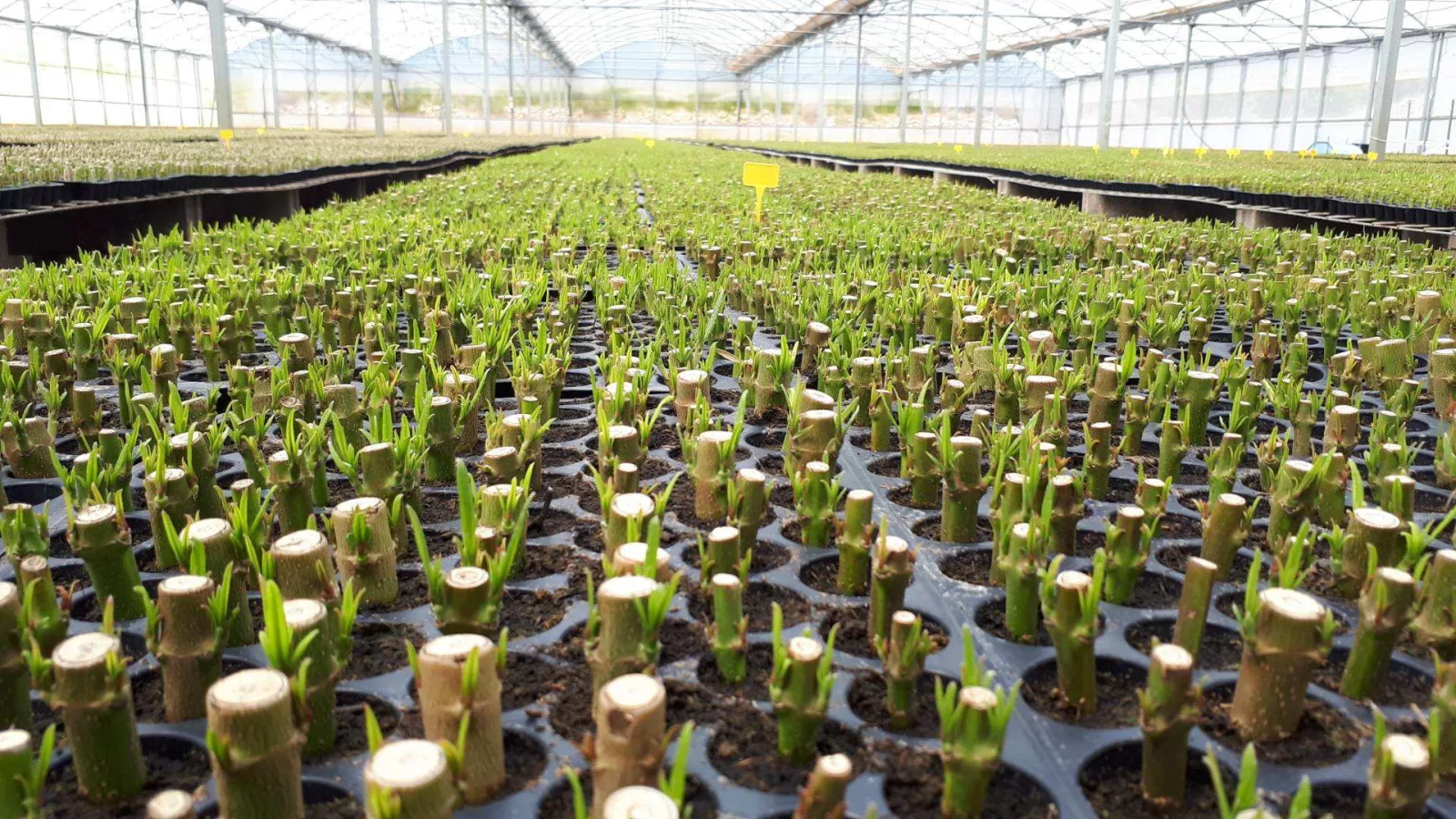
A commercial nursery used a 0-10 mm peat substrate with 1 kg NPK/m3 and 50 g microelements/m3 for Nerium oleander cuttings in large trays. The nursery reported close-to-100% root development and survival under its own production conditions. The result is a practical case reference, not a universal performance guarantee: cutting type, tray format, water management and nursery conditions still need to be matched and tested for each programme.
- A commercial Nerium oleander cutting programme used a 0-10 mm peat substrate in large trays.
- The supplied composition was described as 0-10 mm substrate with 1 kg NPK/m3 and 50 g microelements/m3; a 10% perlite addition can also be considered where the programme needs it.
- The nursery reported close-to-100% root development and survival under its own production conditions.
- The reported result is specific to that programme. Cutting type, tray format, moisture management and nursery climate must be confirmed before applying the same approach elsewhere.
A substrate for plant cuttings has to support the first stage of root development before the young plant can take up water and nutrients through a functioning root system. The medium must keep the cutting stable in the tray, hold usable moisture around the insertion point and retain enough air space for new roots to develop.
ASB Professional supplied a cutting-propagation substrate for a Nerium oleander programme in Spain. The nursery used large trays and inserted the cuttings into wet substrate. Under its own production conditions, the nursery reported close-to-100% root development and survival.
This is a useful practical case, but it is not a universal promise. A cutting programme is affected by plant material, cutting maturity, tray format, hygiene, temperature, humidity, irrigation, handling and the local nursery routine. The value of the case is that it makes the product direction and production context visible before another nursery starts its own trial.
The supplied substrate direction:
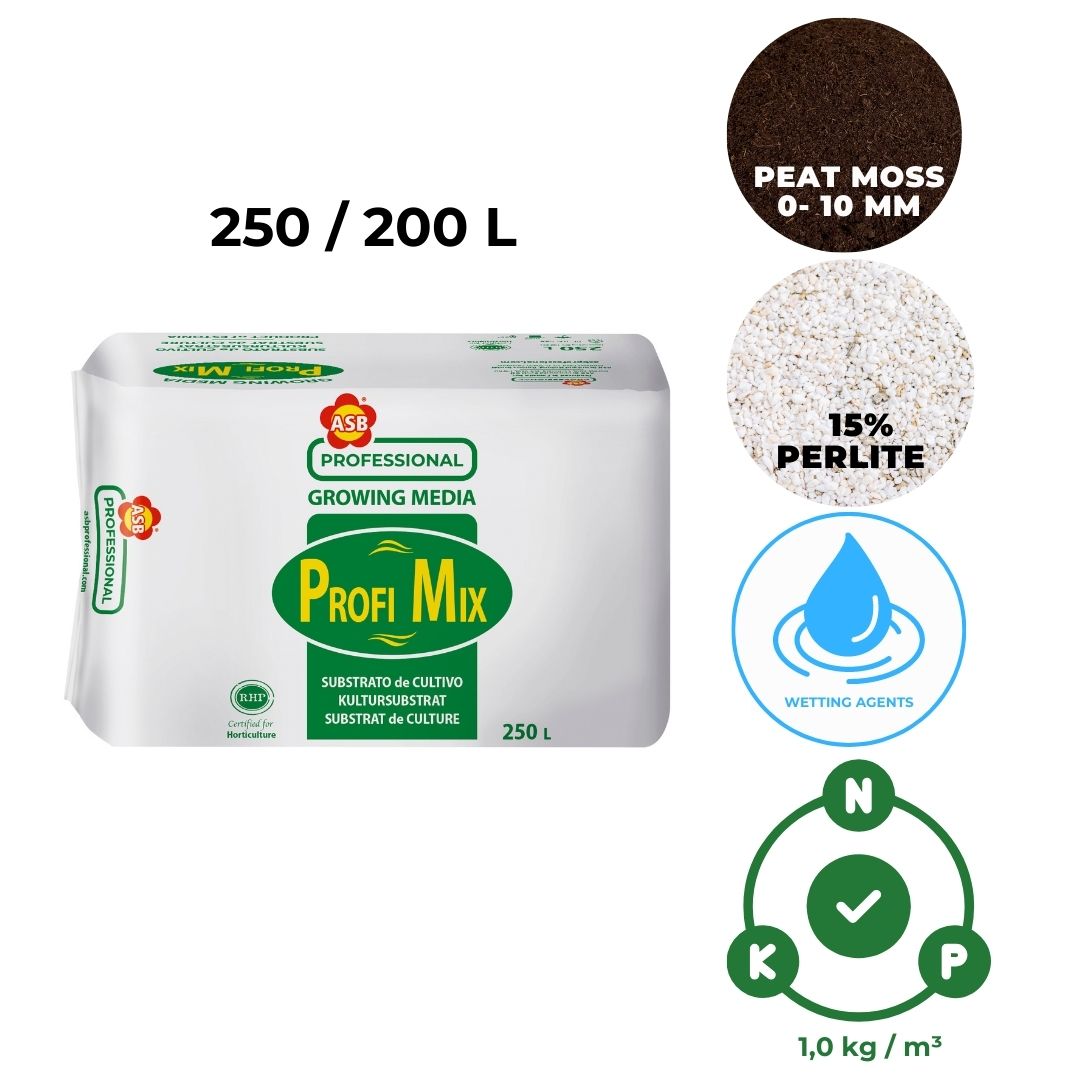
The supplied product was described as a 0-10 mm peat substrate with 1 kg NPK per m3 and 50 g microelements per m3. A 10% perlite addition can also be considered when the intended programme needs a more open root-zone structure.
The 0-10 mm structure gives a defined fine range for tray-based propagation. It is not enough to choose it only by the number on a specification sheet. The nursery still needs to confirm how the material fills the actual tray, how it accepts water, how quickly it drains after irrigation and whether the root zone remains suitably aerated through the rooting period.
A 10% perlite addition is a composition option, not an automatic upgrade. It can be useful where the tray format, irrigation routine or cutting programme needs more air movement. The choice must be made against the real system, because a more open mix also changes water behaviour and can require different irrigation management.
Why large trays and initial moisture matter:
In this programme, the cuttings were planted in wet substrate in large trays. This gives the cutting immediate contact with a hydrated medium at insertion. The subsequent objective is not to keep the tray permanently saturated. The nursery needs to maintain controlled moisture while allowing air to return to the root zone between irrigation events.
That balance is operational rather than theoretical. If the medium remains too wet for too long, early roots can struggle. If it dries unevenly, cuttings within the same tray can develop at different speeds. The right watering routine is therefore part of the substrate discussion, especially when a nursery moves from a smaller test to a larger propagation block.
What the Nerium oleander case shows:
The reported close-to-100% root development and survival rate shows that a defined 0-10 mm peat substrate can support a successful commercial cutting programme when the growing medium and nursery system are aligned. It does not prove that every 0-10 mm substrate will perform the same way, or that the same composition suits every species.
The case is specifically relevant to Nerium oleander cuttings. ASB Professional has also supplied substrates for other cutting programmes in Portugal and China, where the propagated species were different, and for blueberry cuttings in Morocco. These programmes should be treated as separate crop applications, not as evidence for one universal cutting mix.
For a broader explanation of how fine structures behave in propagation-oriented programmes, see Compare Peat Moss Fractions. How to Choose Seedling Mixes for Uniform Germination is also useful for tray filling, early moisture distribution and propagation workflow, even though seed and cutting programmes must be assessed separately.
The questions to settle before a nursery trial:
A nursery should first define the crop and cultivar, the cutting type and maturity, tray or cell format, filling equipment, intended propagation environment, mist or irrigation routine, starting nutrition, pH requirement, production period and target transplant stage. These inputs determine whether a fine 0-10 mm direction is appropriate as supplied or whether a more open composition should be discussed.
The trial should use the same cutting material, tray, filling process, water source and climate conditions planned for commercial production. Record filling behaviour, first wetting, water distribution, drainage, rooting uniformity, root development, survival, reject rate and any irrigation corrections required. This gives the technical and procurement teams evidence that applies to the actual programme rather than to a generic sample.
A practical procurement brief:
- Crop, cultivar and destination market.
- Cutting type, maturity and the intended propagation stage.
- Tray dimensions, cell volume and filling method.
- Required structure, requested components and the pH or nutrition direction to be agreed.
- Water source, mist or irrigation plan, expected production period and trial timing.
- Packaging, required volume, destination, delivery window and documentation needs.
A complete brief lets ASB Professional discuss a substrate direction with the actual nursery conditions in mind. It also keeps the commercial conversation clear: a reported successful case can inform the starting point, while the final product and trial plan remain specific to the next cutting programme.
For cutting propagation, the goal is not a generic mix. It is a documented growing medium that helps the nursery create stable cutting contact, controlled moisture and repeatable rooting across the trays it actually uses.
Recommended ASB products
These products are commonly evaluated with the strategy covered in this article.
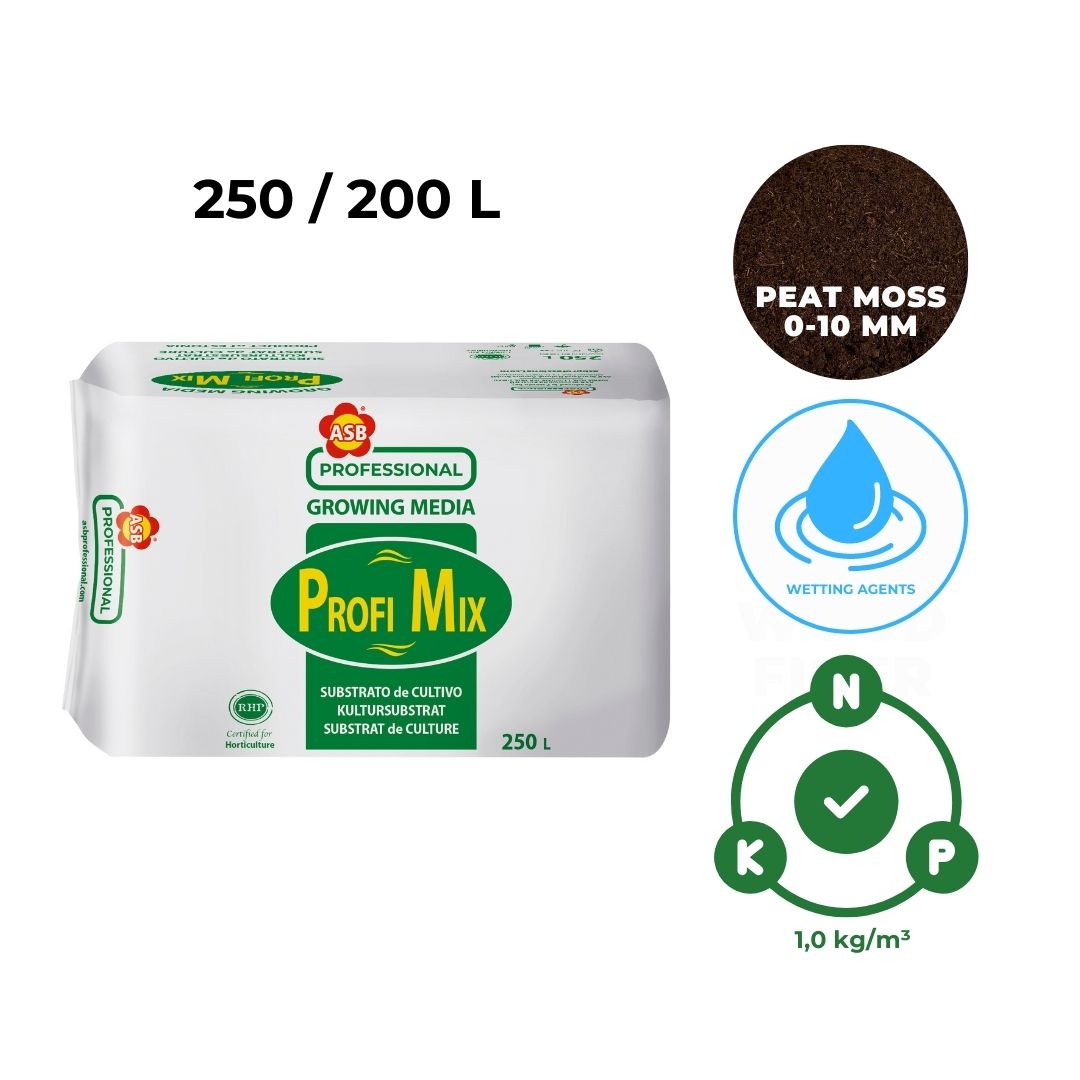
ASB Professional Substrate 0-10 Fertilizer
A published 0-10 mm seed and propagation direction for large trays and young-plant programmes that need a defined fine structure and starter nutrition.
ASB Professional Substrate 0-10 Perlite
A relevant reference when a propagation programme needs to discuss extra root-zone openness alongside the tray, cutting type and irrigation routine.
What this cutting-propagation case establishes
| Criteria | Reported Nerium oleander programme | What a new nursery should still confirm |
|---|---|---|
| Crop and market | Nerium oleander cuttings supplied to a nursery in Spain. | The exact species, cultivar, cutting maturity and local crop requirements. |
| Substrate direction | 0-10 mm substrate with 1 kg NPK/m3 and 50 g microelements/m3; 10% perlite can also be added where required. | The full agreed composition, including pH, wetting-agent status and any added component needed for the local programme. |
| Production setup | Large trays, with cuttings inserted into wet substrate. | Tray-cell dimensions, filling method, mist or irrigation routine, drainage and climate management. |
| Reported outcome | Close-to-100% root development and survival reported by the nursery under its own conditions. | A realistic local trial before a larger commercial order; the result is not a universal guarantee. |
FAQ
What substrate was used for the Nerium oleander cuttings?
The programme was supplied with a 0-10 mm peat substrate containing 1 kg NPK per m3 and 50 g microelements per m3. A 10% perlite addition can also be considered where the tray, irrigation routine or crop programme needs a more open structure. The final agreed composition should always be confirmed for the actual order.
Does close-to-100% rooting mean the same result can be expected in every nursery?
No. The nursery reported close-to-100% root development and survival under its own conditions. Rooting results also depend on the plant material, cutting maturity, tray format, propagation climate, hygiene, irrigation and handling. A local production trial is the appropriate way to validate a new programme.
Why can 10% perlite be considered in a cutting substrate?
Perlite can be considered when the intended programme needs additional openness and air movement in the root zone. It should be selected for a defined tray, cutting and irrigation setup, rather than added as a universal improvement to every propagation substrate.
Can the same substrate direction be relevant for blueberry cuttings?
ASB Professional has also supplied substrates for blueberry cuttings in Morocco, but the crop, acidity requirement, tray setup and water-management plan must be defined separately. A Nerium oleander case is useful evidence that the 0-10 mm direction can work in a cutting programme; it does not replace crop-specific validation.
What should a nursery share before requesting a cutting-propagation substrate?
Share the crop and cultivar, cutting type and maturity, tray or cell format, filling process, propagation climate, irrigation or mist routine, pH and nutrition requirements, planned volume, packaging format, destination and trial timing. This lets the supplier discuss a composition that matches the real production system.
Planning a cutting-propagation programme?
Share the crop, cutting type, tray format, propagation environment, irrigation routine and expected volume. The ASB Professional team can help start the technical discussion around a substrate direction and a realistic trial.
This article is part of the ASB Professional Blog and highlights topics across events, sustainability, and technical growing media expertise. ASB Greenworld Eesti is listed as a member of the Estonian Peat Association (Eesti Turbaliit).
It helps customers and partners follow company developments, market activity, and product-related topics.
ASB Professional Editorial Team