For vegetable seedling nurseries in parts of the Middle East and North Africa, potting soil is a defined product specification: fraction, peat composition, pH, wetting agent, nutrition, bag size and clear product identification.
- In parts of the Middle East and North Africa, potting soil can mean a fine peat-based substrate for vegetable seedling production, not a coarse ornamental potting mix.
- The supplied 80 L 0-5 mm and 250 L 0-10 mm products have distinct stated specifications and should not be requested only by name.
- The bag label and quotation should confirm fraction, peat composition where relevant, pH, wetting agent, nutrition, micronutrients and bag format.
- A short trial in the actual tray, crop and irrigation routine gives a nursery a practical basis for a seasonal order.
In parts of the Middle East and North Africa, potting soil for vegetable seedlings can refer to a fine peat-based growing medium for seedlings and transplants. In parts of Europe and North America, the same term may instead suggest a coarser mix for potted ornamentals. That difference matters when a nursery requests a quotation: the product name alone does not define the material that will arrive.
This guide focuses on two ASB Professional potting-soil specifications supplied for vegetable seedling work. It is not a general guide to every peat fraction or every vegetable crop. The useful question is whether the stated product, bag format and nursery routine fit one another.
Two supplied potting-soil specifications:
80 L Potting Soil 0-5 mm:
The supplied 80 L product has a 0-5 mm fraction and is specified as 70% black peat and 30% white peat. Its stated pH range is 5.5-6.5. The formulation includes 0.2 L/m3 wetting agent, 1.0 kg/m3 NPK and 50 g/m3 micronutrients.
250 L Potting Soil 0-10 mm:
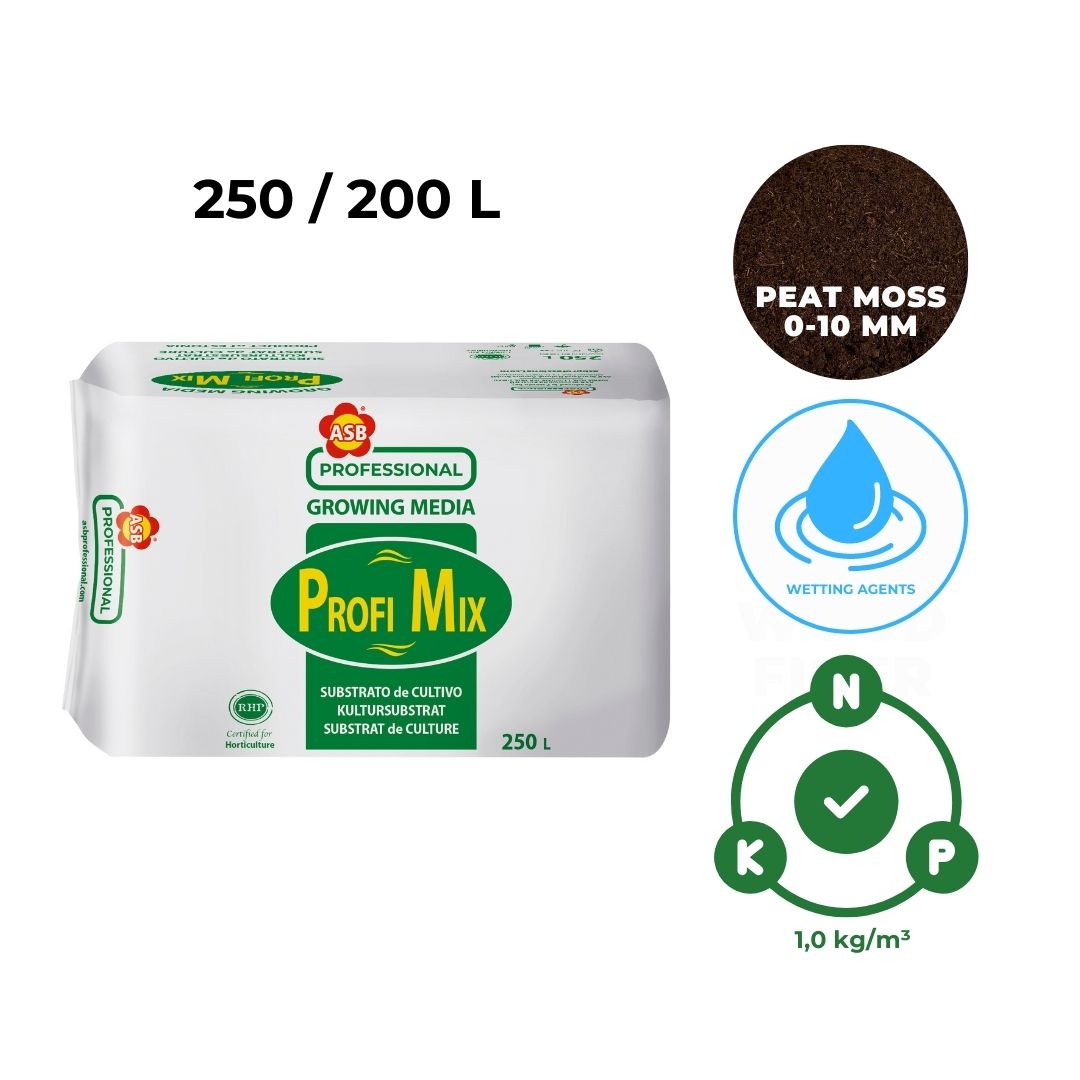
The supplied 250 L product has a 0-10 mm fraction and a stated pH range of 5.5-6.5. Its formulation includes 0.2 L/m3 wetting agent, 1 kg/m3 NPK 15-10-20 and 50 g/m3 micronutrients. Product information is printed on every bag. The supplied specification does not state the peat composition, so that point should be confirmed before an order.
What 0-5 mm and 0-10 mm change in a nursery:
The 0-5 mm product has a finer stated fraction. The 0-10 mm product starts with a broader fine fraction. For a vegetable nursery, the relevant comparison is practical: tray filling, first wetting, water distribution and the way the material responds to the irrigation routine. The fraction does not replace the need to confirm the full composition, pH and nutrition package.
What to confirm on the bag and quotation:
- fraction and intended use for vegetable seedling production
- peat composition where it is part of the requested specification
- pH range, wetting agent, NPK and micronutrient information
- bag size, current bag print, storage requirements and delivery timing
- available technical documents and the contact responsible for the programme
These details keep a buyer from comparing two products that share the name potting soil but are specified for different nursery workflows.
Use a short production trial:
Before a seasonal order, test the material in the actual crop, tray, filling method, irrigation water and fertilizer programme. Record tray fill, first wetting, water distribution, root development and crop uniformity. A comparison with the nursery’s current standard gives the result a practical operational meaning.
Related ASB guidance:
For a broader explanation of seedling-mix behaviour, see How to Choose Seedling Mixes for Uniform Germination. For finished substrates used across wider vegetable production, read Substrate for Vegetables: How Growing Media Supports Commercial Crop Performance. The separate peat moss fractions guide covers raw white peat for local blending, which is a different purchase decision from a bagged, specified potting-soil product.
The practical takeaway:
For vegetable seedling nurseries in parts of the Middle East and North Africa, potting soil should be requested as a defined product specification, not as a generic category name. The supplied 0-5 mm and 0-10 mm products provide two clearly stated starting points. Contact the international team with the crop, tray format, expected bag size, volume and destination to confirm the current specification and supply plan.
Recommended ASB products
These products are commonly evaluated with the strategy covered in this article.
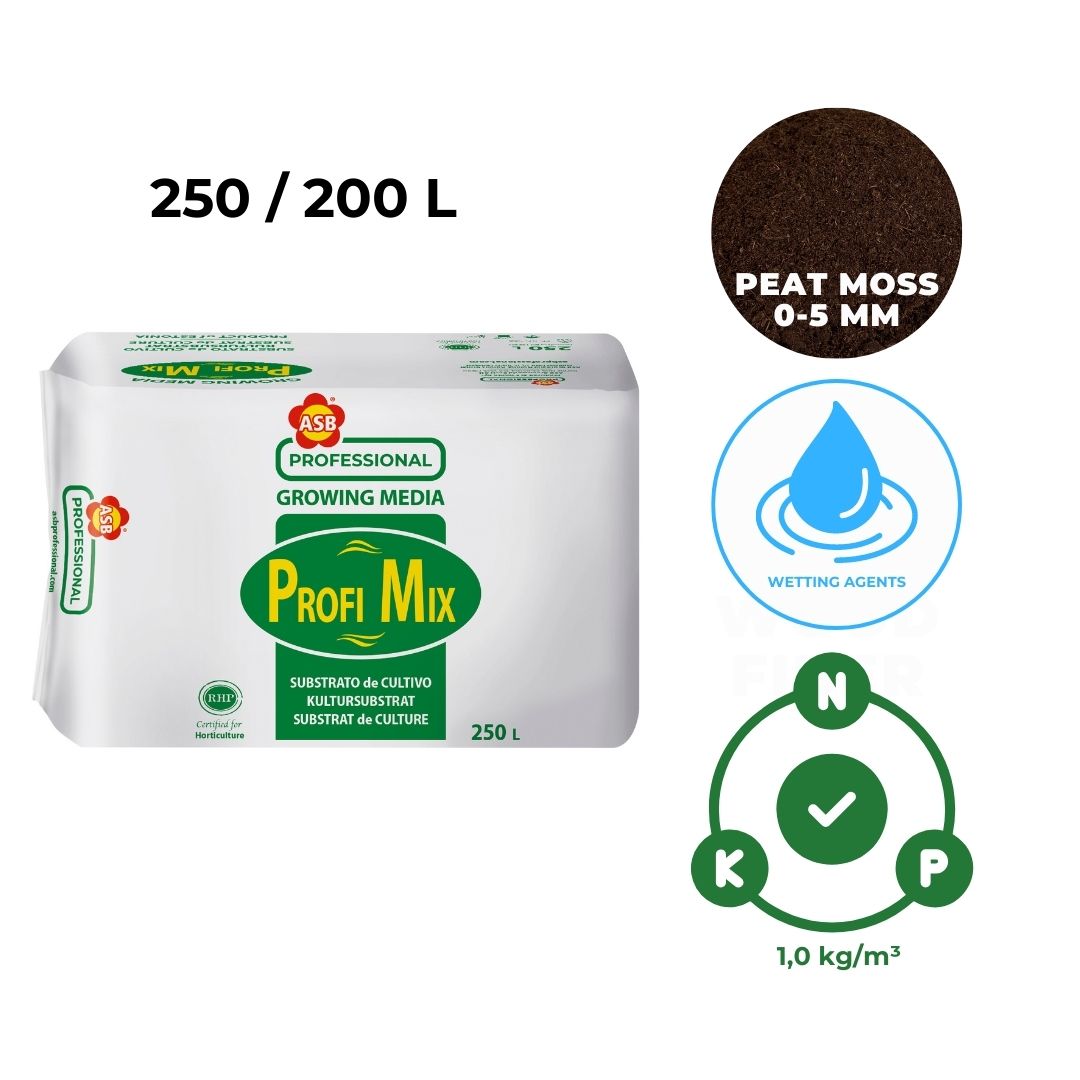
ASB Professional Substrate 0-5 WA NPK
An ASB Professional seedling product with wetting agent and fertilizer. Confirm the current peat composition, pH, bag format and final specification for the intended nursery programme.
ASB Professional Substrate 0-10 Fertilizer
An ASB Professional young-plant product with starter fertilizer. Confirm the current peat composition, pH, bag format and final specification for the intended nursery programme.
Two supplied potting-soil specifications at a glance
| Criteria | 80 L Potting Soil 0-5 mm | 250 L Potting Soil 0-10 mm |
|---|---|---|
| Declared fraction | 0-5 mm. | 0-10 mm. |
| Declared peat composition | 70% black peat and 30% white peat. | Not stated in the current supplied specification. Confirm before ordering. |
| pH range | 5.5-6.5. | 5.5-6.5. |
| Declared additives | 0.2 L/m3 wetting agent, 1.0 kg/m3 NPK and 50 g/m3 micronutrients. | 0.2 L/m3 wetting agent, 1.0 kg/m3 NPK 15-10-20 and 50 g/m3 micronutrients. |
| Bag information | 80 L format. Confirm current bag print and commercial information for the intended order. | 250 L format with product information printed on every bag. |
FAQ
What does potting soil mean for vegetable seedling nurseries in parts of the Middle East and North Africa?
In this market context, potting soil can mean a fine peat-based growing medium for vegetable seedlings and transplants. Elsewhere, the same term may describe a coarser mix for potted ornamentals. The fraction and full specification therefore need to be agreed before a quotation is compared.
What is the difference between 0-5 mm and 0-10 mm potting soil?
A 0-5 mm product has a finer stated fraction, while 0-10 mm has a broader fine fraction. For seedling production, the practical comparison is tray fill, first wetting, water distribution and the nursery irrigation routine. Both should be assessed in the real crop system.
Why does the black and white peat percentage matter?
The stated peat composition describes part of the material the nursery is evaluating. For example, the supplied 80 L 0-5 mm product is specified as 70% black peat and 30% white peat. That is more useful than a generic product name when comparing supplied material with the nursery standard.
What should be confirmed on a potting-soil bag and quotation?
Confirm the fraction, peat composition where relevant, pH range, wetting-agent information, NPK and micronutrient package, bag size, bag print, available documents and delivery plan. This avoids comparing products that share a name but have different specifications.
How should a nursery trial potting soil before a seasonal order?
Use the actual crop, tray, filling method, irrigation water and fertilizer programme. Record tray fill, first wetting, water distribution, root development and crop uniformity, then compare the result with the current nursery standard before increasing volume.
Discuss potting soil for a vegetable seedling programme
Share the crop, tray format, irrigation routine, expected bag size, seasonal volume and destination. The ASB Professional team can confirm the current specification and discuss a suitable trial and supply plan.
This article is part of the ASB Professional Blog and highlights topics across events, sustainability, and technical growing media expertise. ASB Greenworld Eesti is listed as a member of the Estonian Peat Association (Eesti Turbaliit).
It helps customers and partners follow company developments, market activity, and product-related topics.
ASB Professional Editorial Team