Tree and shrub nursery production runs on longer container cycles than propagation or bedding-plant work, so the substrate has to hold its structure, keep draining and stay aerated for a year or more rather than a few weeks. A coarser 0-25 to 0-40 mm peat fraction resists compaction better than a fine mix over that period. pH direction depends on the species: acid-loving shrubs such as azaleas, rhododendrons and camellias need a naturally acidic base around pH 3.5-4.2, while general nursery stock is usually grown closer to pH 5.8-6.2. ASB Professional supplies both directions from its Estonian raw peat and potting mix ranges.
- Trees and shrubs stay in a container far longer than propagation or bedding-plant crops, often a full growing season or more.
- A coarser peat fraction, roughly 0-25 to 0-40 mm, resists compaction and holds air space better than a fine mix over that period.
- pH direction depends on the species: acid-loving shrubs need a naturally acidic base around pH 3.5-4.2, while general nursery stock is usually grown closer to pH 5.8-6.2.
- A structure that looks fine at potting can still compact under a season of overhead irrigation and settling; structural stability matters more than the day-one specification.
- Container size and expected time in the container should set the fraction and structure, not a single default nursery mix used for everything.
- ASB Professional supplies both an acidic raw peat direction and a pH-adjusted coarser potting mix direction from its Estonian range.
Peat substrates for trees and shrubs have a different job to do than a propagation mix. A tree or shrub can sit in the same container for one, two or several growing seasons before it ships, while a propagation tray crop is usually gone within weeks. That gap in timeline is the reason a nursery substrate cannot simply be a coarser version of what works in a seed tray.
The short version: fraction and structure should be chosen for how long the material has to last in the container, and pH should be chosen for the specific species, not for the nursery as a whole.
Why timeline changes the substrate requirement:
A propagation tray is filled, wetted, germinated or rooted, and emptied within a matter of weeks. Whatever structure the substrate has at filling is close to what it still has when the crop leaves. A container of nursery stock is a different situation. It is watered repeatedly, often overhead, across a full growing season or longer, and it settles and compacts under its own weight and root growth over that time. A substrate that looks perfectly acceptable at potting can still lose air space and drainage well before the plant is ready to ship.
Structural stability over time, then, matters more for tree and shrub production than the specification on the day of filling. The relevant question is not only what the material looks like now, but what it will still look like after a season of irrigation and settling.
Fraction and structure for longer cycles:
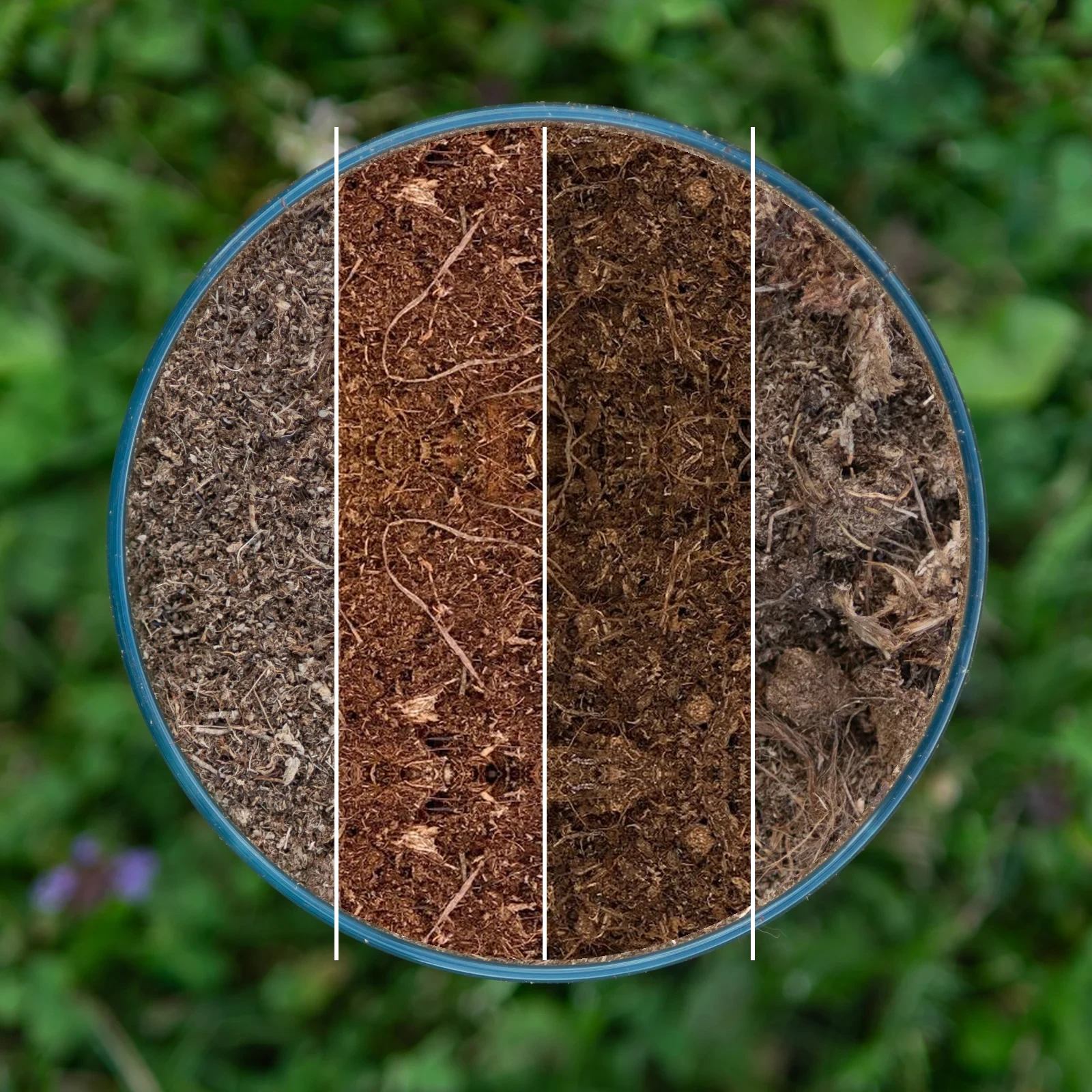
A coarser peat fraction generally holds up better than a fine one over a long container cycle, because more coarse structure means more retained air space as the material settles. Fine fractions such as 0-5 or 0-10 mm, well suited to propagation trays, are more prone to compacting into a denser mass under repeated watering over months. For tree and shrub nursery work, a fraction in the 0-25 to 0-40 mm range is the more common starting point, with the coarser end of that range generally favoured for larger containers and longer expected cycles.
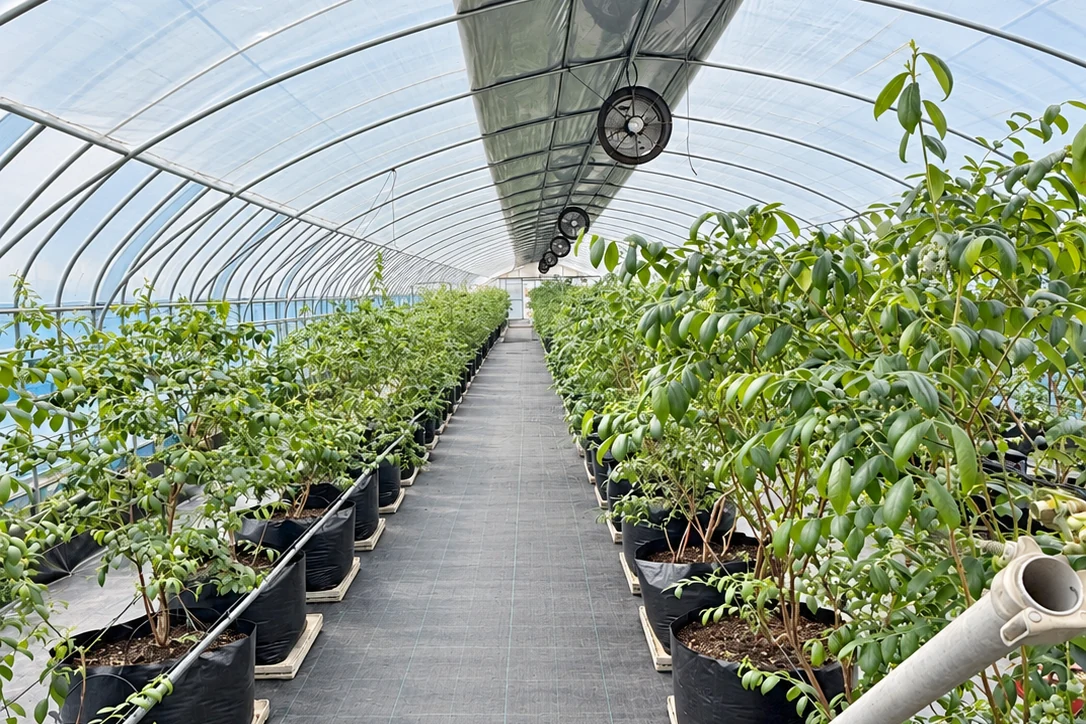
Container size interacts with this choice. A one- or two-litre liner pot with a shorter turnaround can often work with a medium fraction, while a larger container intended to hold a shrub or young tree for a full season or more benefits from the extra structure of a coarser mix.
pH direction depends on the species, not the nursery:
Trees and shrubs are not one pH group. Acid-loving species such as azaleas, rhododendrons, camellias and several other ericaceous shrubs need a naturally acidic root zone, commonly in the pH 3.5-4.2 range. General nursery stock and a broad range of other trees and shrubs are typically grown at a less acidic pH, commonly around 5.8-6.2. A nursery running both groups on a single default mix is very likely getting the pH wrong for one of them.
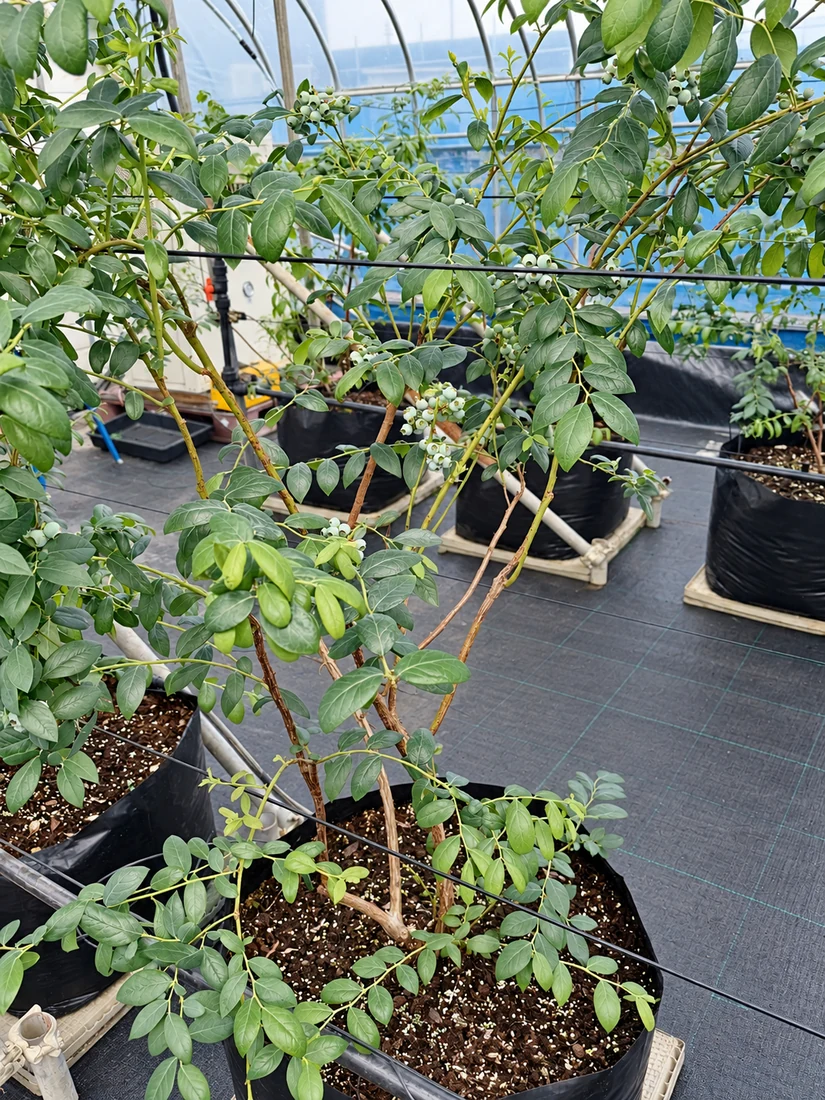
A raw, naturally acidic peat and a pH-adjusted potting mix are both legitimate starting points for this reason, depending on which group of species a given container run is for. Treating "nursery substrate" as one fixed recipe skips a decision that the plant material actually requires.
Raw peat base or finished potting mix:
A raw peat base, supplied at its natural acidic pH, gives a nursery control over lime rate, any added components, and the exact pH target for a specific species group. Operations that already blend their own recipes and want to formulate the acidic direction themselves tend to prefer this route. A finished, pH-adjusted potting mix removes that blending step and arrives ready to use at a stated pH and structure instead, a better fit for a nursery that wants a defined, repeatable input without running its own formulation line. Neither option is inherently correct; the choice comes down to the nursery's own mixing capacity and quality control.
Nutrient strategy over a longer cycle:
A starter nutrient charge that is enough for a few weeks in a propagation tray is not enough to carry a tree or shrub through a full season of top growth and root development. A nursery substrate for longer container cycles needs to work alongside the grower's own ongoing feeding programme rather than trying to supply the whole season from a single starter charge. Confirming what nutrient level, if any, is built into the substrate is part of the same specification conversation as fraction and pH.
What to verify before scaling up an order:
A short trial at potting can confirm fill behaviour and first wetting, but it cannot show how the structure holds up over a season. Where possible, run a trial through a full container cycle on the actual species, container size and irrigation system planned for commercial production, and check structure and drainage again after that period, not only at the start. That is the test that actually reflects how a tree or shrub nursery uses the material.
For more on how peat fraction and decomposition grade behave in general, see Compare Peat Moss Fractions: 0-5 to 0-40 mm and White Peat vs Brown Peat vs Black Peat. For how pH figures should be compared between suppliers, see Peat Moss pH and EC for Commercial Growing Media.
What to send with an enquiry:
Before requesting a quotation, define:
- The species or species group, and whether it needs an acidic or near-neutral root zone.
- Container size and the expected time in the container before shipping.
- Whether a raw acidic peat base or a finished pH-adjusted mix is preferred.
- Nutrient charge requirements alongside the planned feeding programme.
- Packaging format, volume, destination and trial timing.
A tree or shrub nursery substrate is a longer commitment than a propagation mix, both in the container and in the supply relationship. For peat substrates for trees and shrubs, that is the real test: not what the mix looks like at potting, but whether the fraction, structure and pH direction still hold up a season later, when a mistake is much harder to correct.
Recommended ASB products
These products are commonly evaluated with the strategy covered in this article.
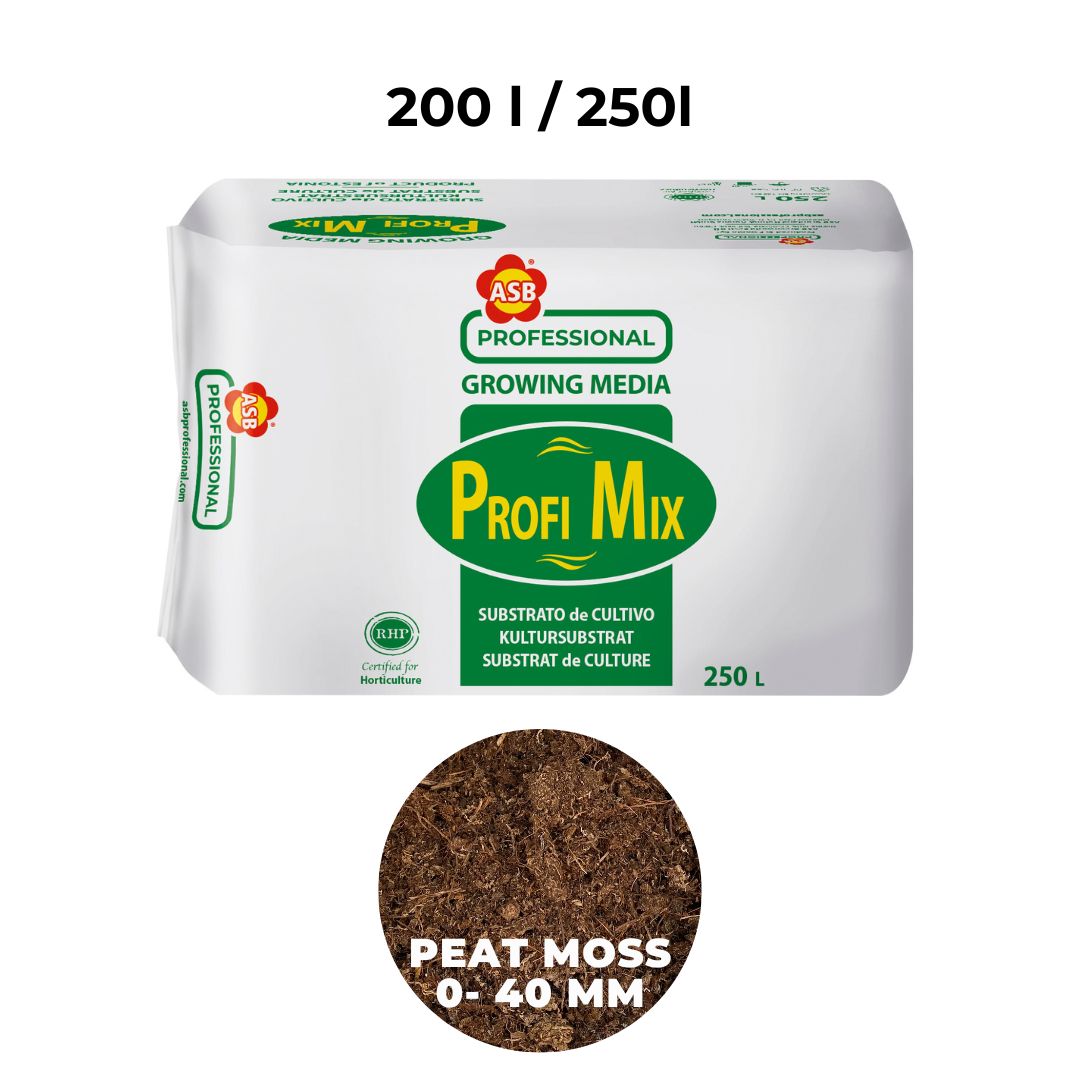
ASB Professional Substrate WP040
A 0-40 mm raw white peat at natural pH 3.5-4.2, suited to acid-loving shrubs and to nurseries that blend their own container mix.
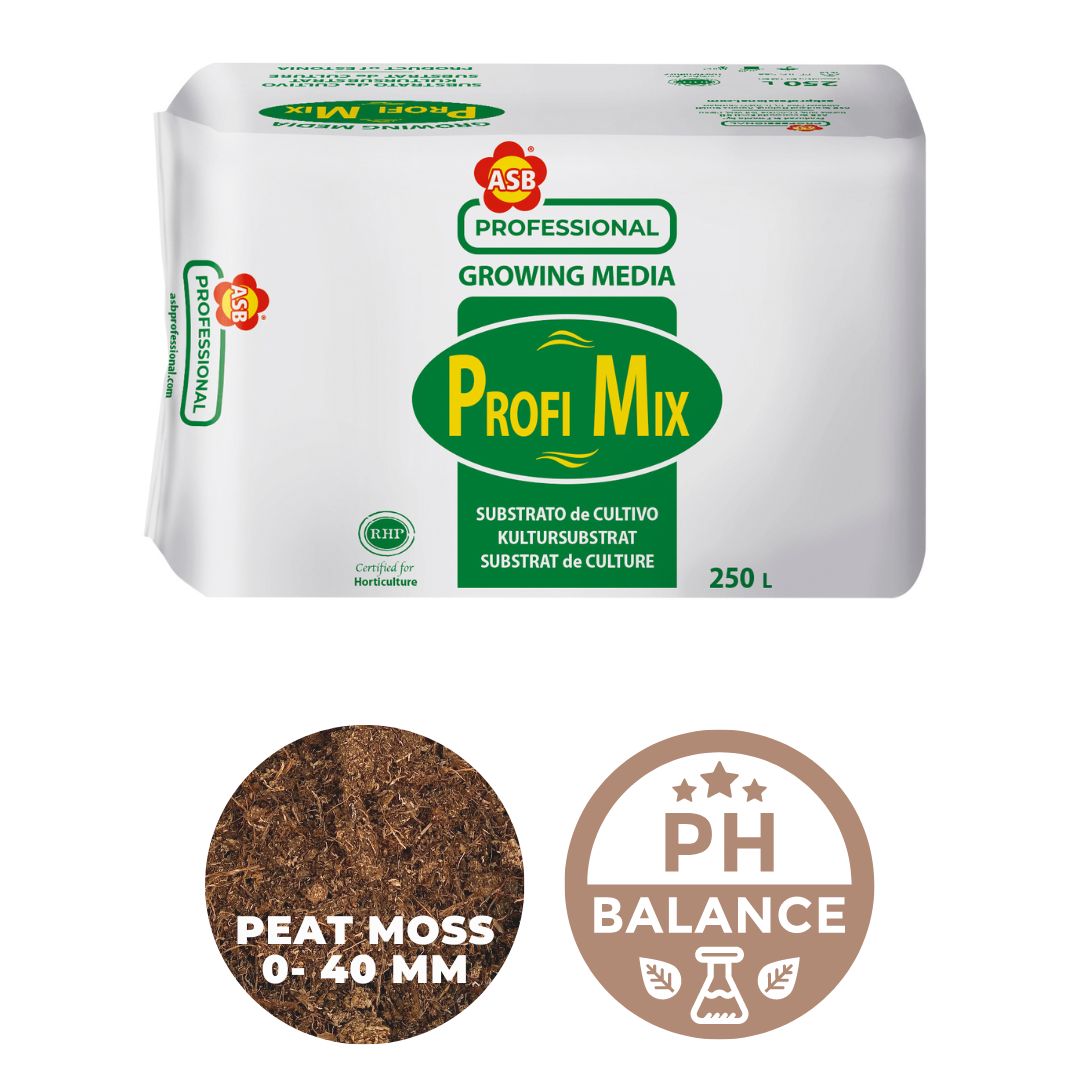
ASB Professional Substrate 0-40 pH
A 0-40 mm pH-adjusted composition at pH 5.8-6.2 for longer crop cycles, larger containers and general nursery stock.
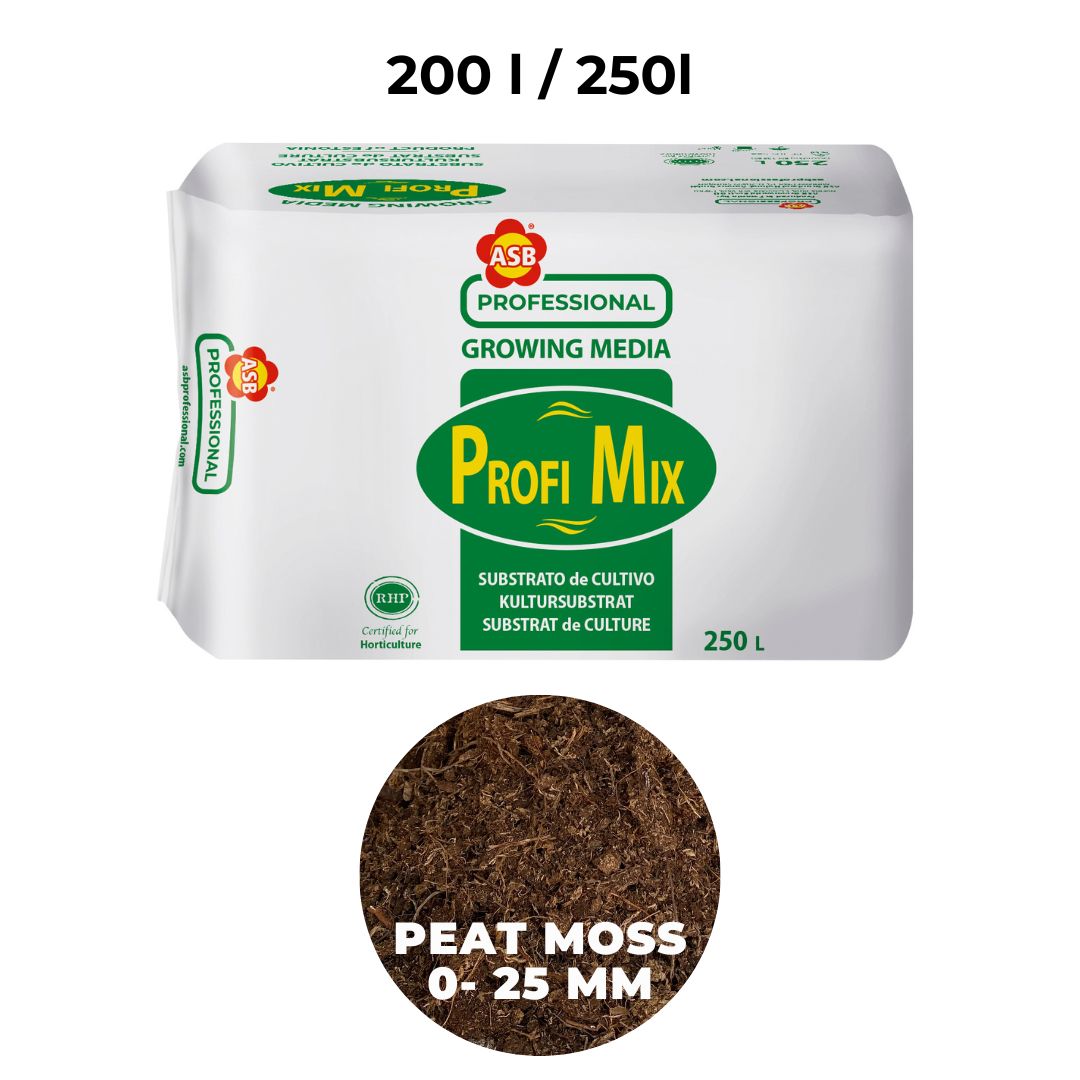
ASB Professional Substrate WP025
A 0-25 mm raw peat option for younger nursery stock or smaller containers that do not need the coarsest 0-40 mm structure.
Short-cycle propagation vs longer-cycle container nursery stock
| Criteria | Propagation and bedding plants (weeks) | Tree and shrub nursery stock (a season or more) |
|---|---|---|
| Typical fraction | Fine, commonly 0-5 or 0-10 mm, for tight tray fill and close root contact. | Coarser, commonly 0-25 to 0-40 mm, to keep structure and air space over a longer period. |
| Structural risk | Low; the crop is out of the tray before the material has time to settle or compact. | Higher; repeated irrigation and time can compact a fine or poorly structured mix. |
| pH direction | Usually a single defined range for the whole propagation programme. | Depends on the species: acidic for azaleas, rhododendrons and similar shrubs; near-neutral for general nursery stock. |
| Nutrient strategy | A starter charge is often enough for the short time in the tray. | Needs to support root and top growth over months, alongside the grower's own feeding programme. |
| What to verify before a larger order | Fill behaviour, first wetting, and early root development in a tray trial. | Structure and drainage after a full season of irrigation, not just at potting. |
FAQ
What peat fraction is best for tree and shrub nursery containers?
A coarser fraction, typically in the 0-25 to 0-40 mm range, generally holds up better than a fine mix over a full container cycle, because it keeps more air space and resists compaction under repeated irrigation. The right choice within that range depends on container size and how long the plant will actually stay in it; larger containers and longer cycles generally favour the coarser end of the range.
What pH should a substrate for trees and shrubs be?
It depends on the species. Acid-loving shrubs such as azaleas, rhododendrons and camellias need a naturally acidic base, commonly around pH 3.5-4.2. General nursery stock and a broader range of trees and shrubs are usually grown closer to pH 5.8-6.2. A single default mix used for every species in a nursery is unlikely to be correct for both groups at once.
Why does structure matter more for nursery stock than for propagation trays?
A propagation tray crop is out of the substrate within weeks, before compaction or structural breakdown has time to develop. A tree or shrub can sit in the same container through a full season or more of overhead irrigation, settling and root growth. A substrate that looks acceptable at potting can still compact and lose drainage well before the crop is ready to ship, which is why structural stability over time matters more than the day-one specification.
Can the same substrate be used for both acid-loving and general nursery stock?
Not as a single fixed recipe. Acid-loving species need a naturally acidic starting material, while general nursery stock is normally grown at a less acidic pH. A nursery running both programmes typically needs two directions: a raw acidic peat base for the acid-loving group, and a pH-adjusted mix for general stock, rather than one blend applied across every species.
How should a nursery choose between a raw peat base and a finished potting mix?
A raw peat base gives the nursery control over lime rate, added components and the exact pH target, which suits operations that already blend their own recipes. A finished, pH-adjusted potting mix removes that step and is ready to use, which suits nurseries that want a defined structure and pH without running their own blending line. The right choice depends on whether the nursery has the mixing capacity and quality control to manage its own formulation.
What should a nursery confirm before scaling up a substrate order?
Confirm the fraction and structure, the pH direction and whether it fits the specific species being potted, the container size and expected time in the container, and the packaging format for the intended volume. Where possible, trial the material through a full season on the actual container and irrigation system before committing to a larger order, since structural performance over time is what a short trial cannot fully show.
Sourcing substrate for tree and shrub nursery production?
Share the species, container size, expected time in the container, pH direction and volume, and the ASB Professional team can confirm a suitable structure and packaging plan.
This article is part of the ASB Professional Blog and highlights topics across events, sustainability, and technical growing media expertise. ASB Greenworld Eesti is listed as a member of the Estonian Peat Association (Eesti Turbaliit).
It helps customers and partners follow company developments, market activity, and product-related topics.
ASB Professional Editorial Team